
The question I get asked more than almost any other about intermittent fasting is some version of this: what can I actually have during the fasting window?
It is one of the most important practical questions in all of IF. What Can You Eat and Drink While Intermittent Fasting?
Because getting it wrong does not just slow your results. It can mean you have been carrying out a fasting window for weeks that was never metabolically intact.
The answer to what can you eat while intermittent fasting has two parts. During the fasting window, the rules are strict and the list is short. During the eating window, the rules are different and the choices are wide. Most people confuse the two or apply eating-window logic to the fasting window without realising it.
This article gives you both lists in full. What you can drink during the fasting window and why each is allowed. What breaks a fast and exactly why. And what to eat when your eating window opens to make the most of the metabolic work the fast just did.
For the complete understanding of why the fasting window produces results in the first place, the guide on what is intermittent fasting covers the full biology. The complete framework is in the intermittent fasting diet plan. This article is specifically about what goes in your body and when.
The Rule That Governs Everything: Insulin
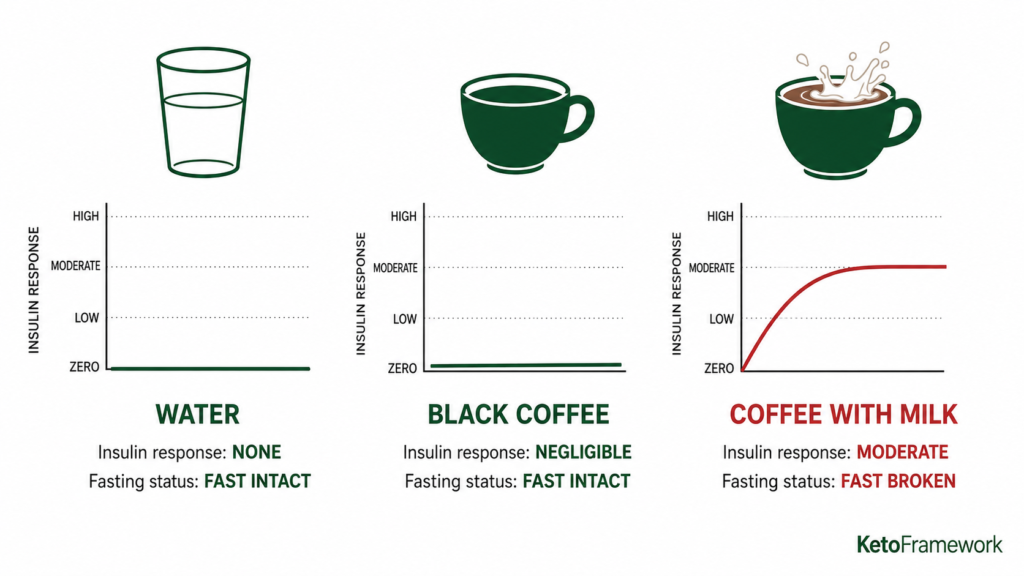
Before getting into the full list, it helps to understand the one rule that determines everything about what can you eat while intermittent fasting. That rule is this: anything that raises insulin breaks the fast.
This is not a complicated framework once you understand it. Insulin rises in response to glucose, protein to a lesser degree, and calories in general. While insulin is elevated, fat burning is suppressed and the metabolic benefits of fasting are paused. The fasting window works by keeping insulin low for a sustained period. Anything that raises insulin, however slightly, shortens or interrupts that window.
The practical implication is simple. Zero calories and zero macronutrients means no insulin response and no broken fast. Any meaningful calorie or protein input, from food, milk, cream, protein powder, or sweetened drinks, raises insulin and ends the fasting state.
Everything in the allowed and not allowed lists below comes back to this rule.
What Can You Drink During the Fasting Window: The Complete List
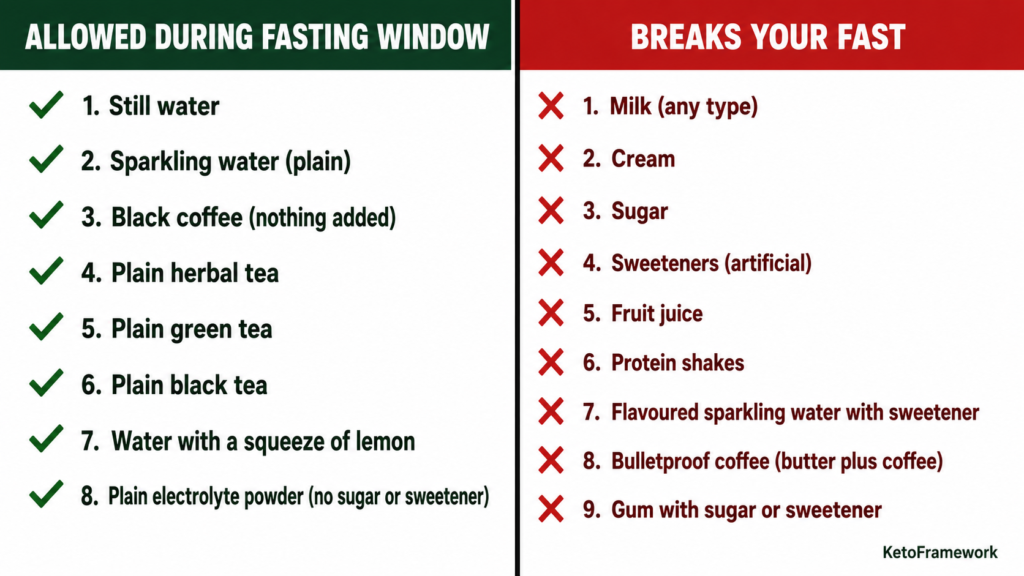
Here is the complete list of what you can drink during the fasting window, with a clear explanation of why each one is allowed.
ALLOWED during the fasting window
| Item | Notes |
| Still water | As much as you want. Active hydration is essential during the fasting window. |
| Sparkling water (plain) | Same zero-calorie profile as still water. Plain only, not flavoured with sweeteners. |
| Black coffee (nothing added) | Does not raise insulin. Mild appetite suppressant. Must stay completely plain. |
| Plain herbal tea | No milk, no sweetener of any kind. |
| Plain green tea | No milk, no sweetener of any kind. |
| Plain black tea | No milk, no sweetener of any kind. |
| Water with a squeeze of lemon | Negligible calorie content. No meaningful insulin impact. |
| Plain electrolyte powder (no sugar or sweetener) | Check the label. Must contain no sugar, sweeteners, or calories. |
BREAKS YOUR FAST
| Item | Notes |
| Milk (any type) | Contains lactose and protein. Raises insulin. Even a small splash breaks the fast. |
| Cream | Contains calories and fat. Technically breaks the fast for strict metabolic purposes. |
| Sugar | Raises blood glucose immediately. Breaks the fast. |
| Sweeteners (artificial) | Evidence is mixed but some provoke a cephalic phase insulin response. Avoid during fasting. |
| Fruit juice | High in fructose. Triggers a large, rapid insulin response. |
| Protein shakes | Protein raises insulin. Belongs in the eating window only. |
| Flavoured sparkling water with sweetener | Check the label. Sweetened versions break the fast. |
| Bulletproof coffee (butter plus coffee) | Significant calories from fat. Technically breaks the fast. |
| Gum with sugar or sweetener | May trigger insulin response. Use unsweetened or skip entirely. |
Still water
The most important thing you can consume during any fast. Water has zero calories, zero macronutrients, and zero insulin response. During the fasting window your kidneys are excreting more sodium than usual because insulin is low, and sodium pulls water with it. Active hydration during the fasting window is not optional. Aim for at least two litres between waking and your first meal.
Sparkling water
Sparkling water is still water with carbonation. Same zero-calorie, zero-macronutrient profile. It does not break a fast. Plain sparkling water is an excellent fasting window option for anyone who finds still water boring and is tempted to reach for something more. One practical note: plain sparkling water only. Not flavoured sparkling water with sweeteners added. Even zero-calorie sweeteners are worth avoiding during the fasting window as some may provoke an insulin response in sensitive individuals.
Black coffee
This is the question I am asked most. Can you drink coffee while fasting? Yes, with one condition: it must be completely black. Nothing added.
Plain black coffee contains roughly 2 calories per cup, no meaningful carbohydrates, no protein, and no fat. A randomised crossover study published in Clinical Nutrition ESPEN (Sciarrillo et al., 2021)[1] found that black coffee consumed after a 10-hour overnight fast did not meaningfully affect fasting triglycerides or glucose in healthy adults compared to water alone. The fast stays metabolically intact. Black coffee is also a mild appetite suppressant, which makes the fasting window significantly easier to hold in the first two to three weeks of IF.
The moment you add milk, cream, sugar, or any flavoured syrup, the picture changes completely. Milk contains lactose (a sugar) and protein, both of which raise insulin. Even a small splash of milk is enough to interrupt the fasted state. The answer to can you drink coffee while fasting is yes, but only if it stays plain.
Plain herbal tea
Plain herbal tea, green tea, and black tea all have negligible calorie content and produce no meaningful insulin response. All are allowed during the fasting window. The same rule applies as with coffee: nothing added. No milk. No honey. No sweetener. A plain herbal tea with hot water is one of the most underrated tools in the fasting window, particularly in the evenings after the eating window closes.
Water with lemon
A squeeze of fresh lemon in water adds a negligible amount of calories and a trace of carbohydrate that has no meaningful insulin impact. This is allowed. It does not break a fast for the purposes of weight loss or metabolic health. Lemon water is particularly useful first thing in the morning and makes hydration easier for people who find plain water difficult to drink consistently.
Plain electrolyte powder (no sugar, no sweetener)
During the fasting window, insulin stays low. Low insulin signals the kidneys to excrete more sodium, and sodium loss brings magnesium and potassium with it. A classic review published in the American Journal of Medicine (Drenick et al., 1971)[2] documented that both sodium and potassium excretion increase significantly in the early phase of fasting. The headaches and fatigue most beginners experience in the first week of IF are primarily this electrolyte depletion, not hunger or starvation. A quarter teaspoon of sea salt in water in the morning addresses most of it. Plain electrolyte powder with no sugar or sweetener is the next step up. Check the label: if it contains sugar, sweeteners, or calories, it breaks the fast.
What Breaks a Fast: The Full List and Why
Milk and cream
Any form of milk, whole, semi-skimmed, skimmed, oat, almond, or otherwise, contains calories and macronutrients that raise insulin. Even a tablespoon of milk in coffee is enough to interrupt the fasted state. This is the most common accidental fast-breaker for new IF practitioners. The habit of adding milk to tea or coffee runs deep, and breaking it requires deliberate attention in the first two weeks.
Cream is the same in principle. Heavy cream has slightly fewer carbohydrates than milk but still contains calories and fat that produce a caloric and hormonal response. It breaks the fast. Some people argue that a teaspoon of heavy cream has a negligible insulin effect, and while the insulin response is small, the fast is technically broken from a strict metabolic standpoint. For the purposes of this guide, milk and cream both break the fast.
Sugar and sweeteners
Sugar raises blood glucose and triggers an insulin response. This includes honey, agave, maple syrup, and any other form of sugar added to drinks. Zero-calorie artificial sweeteners are more nuanced. The evidence is mixed on whether they raise insulin, but some studies suggest certain sweeteners produce a cephalic phase insulin response (the body releasing insulin in anticipation of food based on sweetness). The safest approach during the fasting window is to avoid sweeteners entirely. Plain is always safer than sweetened.
Fruit juice
Fruit juice is essentially sugar water. Even fresh-squeezed juice contains significant fructose that raises blood glucose and triggers an insulin response immediately. A glass of orange juice in the morning is one of the most effective ways to break a fast completely within seconds of the fasting window.
Protein shakes and supplements
Protein raises insulin. Even a whey protein shake made with water and nothing else will produce a significant insulin response because protein stimulates insulin secretion, particularly leucine-rich proteins like whey. Protein shakes are food. They belong in the eating window, not the fasting window.
This applies to collagen powder and BCAAs (branched chain amino acids) as well. Both contain amino acids that raise insulin to varying degrees. If you take these supplements, take them with your first meal, not during the fast.
Bulletproof coffee (butter plus coffee)
Bulletproof coffee is black coffee blended with butter or MCT oil. Some proponents claim it does not break a fast because it contains no carbohydrates. The reality is more nuanced. Butter and MCT oil contain significant calories and fat. While fat has the smallest insulin effect of the three macronutrients, it still contributes calories that interrupt the fasted state for autophagy purposes and technically break the fast for strict metabolic purposes. Bulletproof coffee is better understood as a modified fasting protocol rather than true fasting. If your goal is weight loss and you find bulletproof coffee helps you hold a longer window, it may still support your results. If your goal is a clean metabolic fast, skip the butter.
Gum with sugar or sweetener
Many chewing gums contain sugar alcohols, artificial sweeteners, or sugar. All of these carry the same risks described above. If you chew gum during the fasting window, check the label and choose unsweetened options, or skip gum entirely.
What to Eat During the Eating Window: Intermittent Fasting Foods Allowed

The eating window is not a restriction period. It is the time you fuel properly for the fasting hours ahead. What you eat during this window matters, not because IF requires a specific diet, but because food quality determines the quality of the insulin response, and the insulin response determines how effectively the next fasting window performs.
Here is how I think about intermittent fasting foods allowed during the eating window.
How to break the fast: the first meal
After 14 to 18 hours of fasting, insulin is at its lowest point of the day. The first meal you eat triggers the largest insulin spike of the day. A protein and fat forward first meal produces a moderate, measured insulin response and maintains satiety for three to four hours. A high-carbohydrate first meal produces a large, rapid insulin spike that partially offsets the metabolic benefit of the fasting window that just ended.
The best first meal of the eating window follows this pattern: protein first, healthy fat second, vegetables third, minimal refined carbohydrates.
Practical examples of what to eat when breaking the fast:
• 2 to 3 eggs cooked in butter, a halved avocado, leafy greens with olive oil. This is the meal I eat at 12pm almost every day. High protein, high fat, minimal insulin response, satisfying for 3 to 4 hours.
• Salmon fillet with leafy greens dressed with olive oil and a squeeze of lemon. Same principle. Protein and fat dominant, low carbohydrate load.
• Full-fat Greek yoghurt with a handful of mixed nuts. A lighter option that still follows the protein and fat forward principle.
What to eat during the eating window across the day
After the first meal, the eating window opens up significantly. The goal is to eat proper, satisfying meals, not to restrict calories for their own sake. One of the most consistent findings across IF research is that a shorter eating window naturally reduces total calorie intake without deliberate restriction. A meta-analysis published in PMC (Huang et al., Food Science and Nutrition, 2023)[3] found that 16:8 participants consumed significantly less food without counting calories. This means you do not need to obsess over what you eat within the window. You need to eat enough, eat well, and eat consistently.
The broad guidelines:
• Prioritise protein at every meal. Aim for at least 25 to 35 grams of protein per meal. Protein preserves muscle, maintains satiety, and has the highest thermic effect of any macronutrient.
• Include healthy fats. Olive oil, avocado, nuts, fatty fish, eggs, full-fat dairy. These foods are calorie-dense, satiating, and produce a measured insulin response.
• Eat plenty of vegetables. Non-starchy vegetables, leafy greens, broccoli, courgette, green beans, spinach, have negligible impact on blood sugar and provide fibre that supports gut health and appetite regulation.
• Minimise refined carbohydrates. White bread, pasta, rice, pastries, sugary drinks, ultra-processed snacks. These produce large, fast insulin spikes that work against the metabolic benefits the fasting window creates.
• Eat two to three full meals. Eating too little during the window raises cortisol, increases hunger during the next fasting period, and makes the system unsustainable.
A sample eating window day on 16:8 (12pm to 8pm):
• 12pm: eggs, avocado, leafy greens, black coffee or tea.
• 3pm to 4pm: salmon or chicken with salad, or full-fat yoghurt with nuts.
• 7pm: whatever is being prepared for the family meal at home, prioritising protein and vegetables.
• 8pm: eating window closes.
What Can You Eat While Intermittent Fasting: The Grey Areas
Some things come up repeatedly as questions because they sit in genuinely ambiguous territory. Here is a clear answer for each.
• Apple cider vinegar: a small amount of apple cider vinegar diluted in water has a negligible calorie content and is unlikely to produce a meaningful insulin response for most people. It is generally considered compatible with the fasting window, though the evidence is limited. Take it well diluted.
• Bone broth: bone broth contains calories and protein. It technically breaks the fast. It is sometimes used in extended fasting protocols as a partial replacement, but for standard 16:8 or 18:6 IF, bone broth belongs in the eating window.
• Supplements and vitamins: fat-soluble supplements (vitamin D, K, fish oil) are better absorbed with food and should be taken during the eating window. Water-soluble vitamins (vitamin C, B vitamins) may be taken during the fasting window as they contribute negligible calories. Check the label for any added fillers, gelatin, or sugar.
• Decaf coffee: same rules as regular black coffee. Plain decaf with nothing added does not break a fast.
• Flavoured sparkling water: depends entirely on the product. Plain sparkling water is fine. Flavoured sparkling water with sugar or artificial sweeteners is not. Check the label.
Frequently Asked Questions About What You Can Eat While Intermittent Fasting
What can you eat while intermittent fasting during the fasting window?
During the fasting window, the only things you can consume without breaking the fast are: still water, plain sparkling water, black coffee with nothing added, plain herbal tea, plain green or black tea, water with a squeeze of lemon, and plain electrolyte powder with no sugar or sweetener. That is the complete list. Anything outside this list contains calories, macronutrients, or compounds that raise insulin and interrupt the fasted state.
Can you drink coffee while fasting?
Yes. Plain black coffee does not break a fast. A clinical study published in Clinical Nutrition ESPEN found that black coffee consumed after a 10-hour overnight fast did not meaningfully affect fasting glucose or triglycerides compared to water alone. The condition is that it must stay completely plain. The moment you add milk, cream, sugar, or any sweetener, the fast is broken because all of these raise insulin. Black coffee is actually one of the most useful tools during the fasting window because it suppresses appetite mildly and requires no preparation.
What breaks a fast?
Anything that raises insulin breaks a fast. In practical terms: any food, milk, cream, sugar, sweeteners, fruit juice, protein shakes, collagen powder, BCAAs, bulletproof coffee, flavoured sparkling water with sweetener, and gum with sugar or sweetener. The rule is simple. If it contains calories or macronutrients in a meaningful amount, it raises insulin and breaks the fast.
What should I eat when breaking a fast?
Break the fast with a protein and fat forward first meal. After 14 to 18 hours of fasting, insulin is at its lowest and the first meal triggers the largest insulin response of the day. Eggs with avocado and leafy greens, salmon with olive oil dressing, or full-fat yoghurt with nuts all produce a moderate, measured insulin response that maintains satiety and sets the metabolic tone for the eating window. A high-carbohydrate first meal such as cereal, toast, or juice produces a large insulin spike that partially offsets the metabolic work of the fasting window.
Is milk allowed during intermittent fasting?
No. Any type of milk, including plant-based milks like oat milk, almond milk, or soy milk, contains calories and macronutrients that raise insulin and break the fast. Even a small splash of milk in tea or coffee is enough to interrupt the fasted state. If you cannot drink black coffee or plain tea, switch to plain herbal tea during the fasting window. Black coffee becomes an acquired taste for most people within two to three weeks of daily IF.
Do electrolytes break a fast?
Plain electrolyte powder with no sugar, sweetener, or calories does not break a fast. It is actually recommended during the fasting window because fasting increases sodium excretion from the kidneys, and sodium depletion pulls magnesium and potassium with it. A quarter teaspoon of sea salt in water addresses most of this. Plain electrolyte powder without sweetener is the next step. Check the label carefully as many commercial electrolyte products contain sugar or sweeteners that would break the fast.
Does lemon water break a fast?
No. A squeeze of fresh lemon in water adds a negligible trace of calories and carbohydrate that has no meaningful insulin impact for the purposes of intermittent fasting for weight loss or metabolic health. Lemon water is fully compatible with the fasting window and is a useful hydration tool.
What Can You Eat While Intermittent Fasting: The Summary
The fasting window rule is one sentence: if it raises insulin, it breaks the fast.
Water, plain sparkling water, black coffee, plain tea, and lemon water do not raise insulin. They keep the fast intact. Plain electrolyte powder with no sweetener maintains your electrolytes without breaking the window.
Everything else, including milk, cream, sugar, sweeteners, protein shakes, juice, and bulletproof coffee, raises insulin to some degree and ends the fasted state.
During the eating window, no single food is forbidden. What matters is that you eat enough, prioritise protein and healthy fat at the first meal, and avoid the habit of breaking the fast with high-carbohydrate foods that spike insulin immediately after the fasting window ends.
My wife and I have both been running 18:6 for well over a year. The fasting window has become invisible to us because black tea is genuinely satisfying on its own, lemon water is refreshing, and we both stopped noticing the absence of food in the morning within the first month. The tools work. You just have to learn to use them.
For the full framework including schedules, progression plans, and method comparisons, the intermittent fasting diet plan covers everything. For how long your fasting window should actually be, the guide on how long should you fast covers every window from 14 to 20 hours. And for building the daily schedule around your life, the intermittent fasting schedule guide has the practical structure.
References
All sources cited in this article are peer-reviewed studies sourced from PubMed or PMC. This article is for informational purposes and does not constitute medical advice. If you have an existing health condition, are pregnant or breastfeeding, or take medication requiring food intake, consult your doctor before starting intermittent fasting.
1. Sciarrillo CM, Keirns BH, Elliott DC, Emerson SR. Effect of black coffee on fasting metabolic markers and an abbreviated fat tolerance test. Clinical Nutrition ESPEN, 2021. https://www.clinicalnutritionespen.com/article/S2405-4577(20)31098-6/abstract
2. Drenick EJ, Hunt IF, Swendseid ME. Fasting: a review with emphasis on the electrolytes. American Journal of Medicine, 1971. https://www.amjmed.com/article/0002-9343(71)90152-5/abstract
3. Huang T, Zheng Y, Li J, et al. Is time-restricted eating (8/16) beneficial for body weight and metabolism of obese and overweight adults? A systematic review and meta-analysis of randomized controlled trials. PMC, Food Science and Nutrition, 2023. https://www.ncbi.nlm.nih.gov/pmc/articles/PMC10002957/