How you break a fast matters more than most IF guides acknowledge.
After 14 to 18 hours of fasting, your insulin is at its lowest point of the day. Your digestive system has been at rest. Your body is primed to respond strongly to whatever you give it first. The first meal of the eating window triggers the largest insulin spike of your day, regardless of what you eat. What you eat determines how large and how fast that spike is, how long you stay satisfied, and how well the rest of the eating window performs.
Get the first meal right and the eating window runs well. Break the fast with the wrong foods and you partially undo the metabolic work the fasting window just completed.
This article covers exactly how to break a fast properly: what to eat, why the food order matters, what to avoid, and the specific first meals I eat myself. For the complete framework that surrounds this meal, the intermittent fasting diet plan covers every schedule and method. For understanding why the fasting window creates the conditions that make this first meal so important, the guide on what is intermittent fasting covers the biology in full.
Why the First Meal After Fasting Is Different
The reason the first meal after fasting deserves specific attention is the insulin sensitivity state your body is in when the fasting window ends.
After 14 to 18 hours without food, insulin has been at baseline for an extended period. A supervised controlled feeding study published in PubMed (Sutton et al., Cell Metabolism, 2018)[1] demonstrated that consistent time-restricted eating improves insulin sensitivity measurably within five weeks, independent of weight loss. This improved insulin sensitivity means your cells are more responsive to insulin signals when the eating window opens. That responsiveness is exactly what you have been building during the fast. The first meal either uses that state well or wastes it.
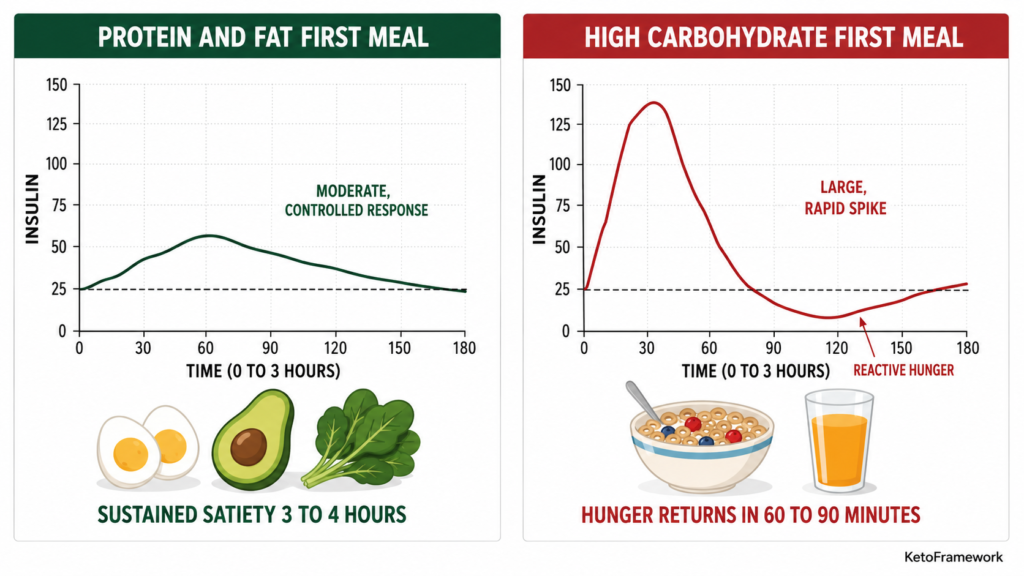
A high-carbohydrate first meal, a bowl of cereal, toast with jam, fruit juice, a sweetened yoghurt, triggers a large, rapid insulin spike in a system that is primed to respond strongly. The spike is fast, the glucose is cleared quickly, and many people experience reactive hunger within 60 to 90 minutes. The eating window, instead of being controlled and satisfying, becomes a cycle of eating and hunger that works against the appetite regulation IF is building.
A protein and fat forward first meal, eggs with avocado, salmon with leafy greens, full-fat yoghurt with nuts, produces a moderate, measured insulin response. Glucose enters the bloodstream more slowly. The satiety signals last three to four hours. The eating window runs calmly.
The difference is not about total calories. Two first meals with identical calorie counts but different macronutrient compositions produce entirely different insulin profiles and entirely different experiences for the rest of the eating window.
The Best Food to Break a Fast: The Principles
Before getting into specific meals, here are the four principles that govern every good first meal after fasting.
Protein first
Protein is the most important macronutrient in the first meal after fasting. It stimulates satiety hormones, produces a moderate and sustained insulin response, and provides amino acids for muscle protein synthesis. Aim for at least 25 to 35 grams of protein in the first meal.
Good protein sources for breaking the fast: eggs (3 eggs provide approximately 18 grams of protein), salmon fillet (30 grams per 100 grams), chicken breast or thigh, full-fat Greek yoghurt (15 to 20 grams per cup), cottage cheese, canned tuna or sardines.
Healthy fat alongside the protein
Fat slows gastric emptying, which extends satiety and moderates the rate at which nutrients enter the bloodstream. Including healthy fat in the first meal after fasting lengthens the satiety window and reduces the insulin response compared to a protein-only meal.
Good fat sources for the first meal: avocado (half an avocado provides approximately 15 grams of fat), olive oil dressing on greens, eggs cooked in butter, nuts alongside yoghurt, fatty fish such as salmon or mackerel.
Vegetables before or alongside
Non-starchy vegetables provide fibre that further slows glucose absorption and supports gut health. Research published in PMC (Shukla et al., BMJ Open Diabetes Research and Care, 2017)[2] found that eating protein and vegetables before carbohydrates in the same meal significantly reduced postprandial glucose and insulin excursions compared to eating carbohydrates first. You do not need to eat them in a strict sequence, but including vegetables in the first meal rather than starting with carbohydrates produces a meaningfully better metabolic response.
Good vegetable choices for the first meal: leafy greens (spinach, rocket, mixed leaves), broccoli, courgette, cucumber, tomatoes, avocado.
Minimal refined carbohydrates
This is the most important thing to avoid when breaking the fast. Refined carbohydrates, white bread, cereals, pastries, fruit juice, rice cakes, produce large and rapid insulin spikes that undo the low-insulin state the fasting window created. They are not forbidden during the eating window, but starting the eating window with them is the highest-cost choice you can make after the fasting window ends.
If you want to include carbohydrates in the first meal, use slow-digesting, whole food sources. Sweet potato, oats, legumes, whole grain bread. These produce a significantly more measured glucose and insulin response than their refined equivalents.
Best Food to Break a Fast: Specific Meal Options
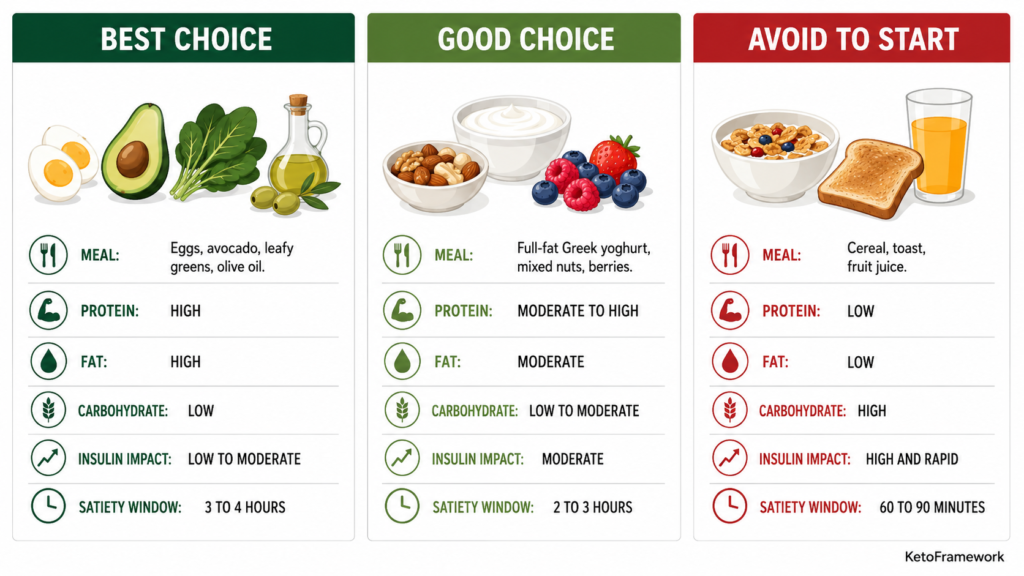
Here are the specific first meals I recommend for breaking the fast, with practical notes on each.
The everyday first meal (what I eat at 12pm)
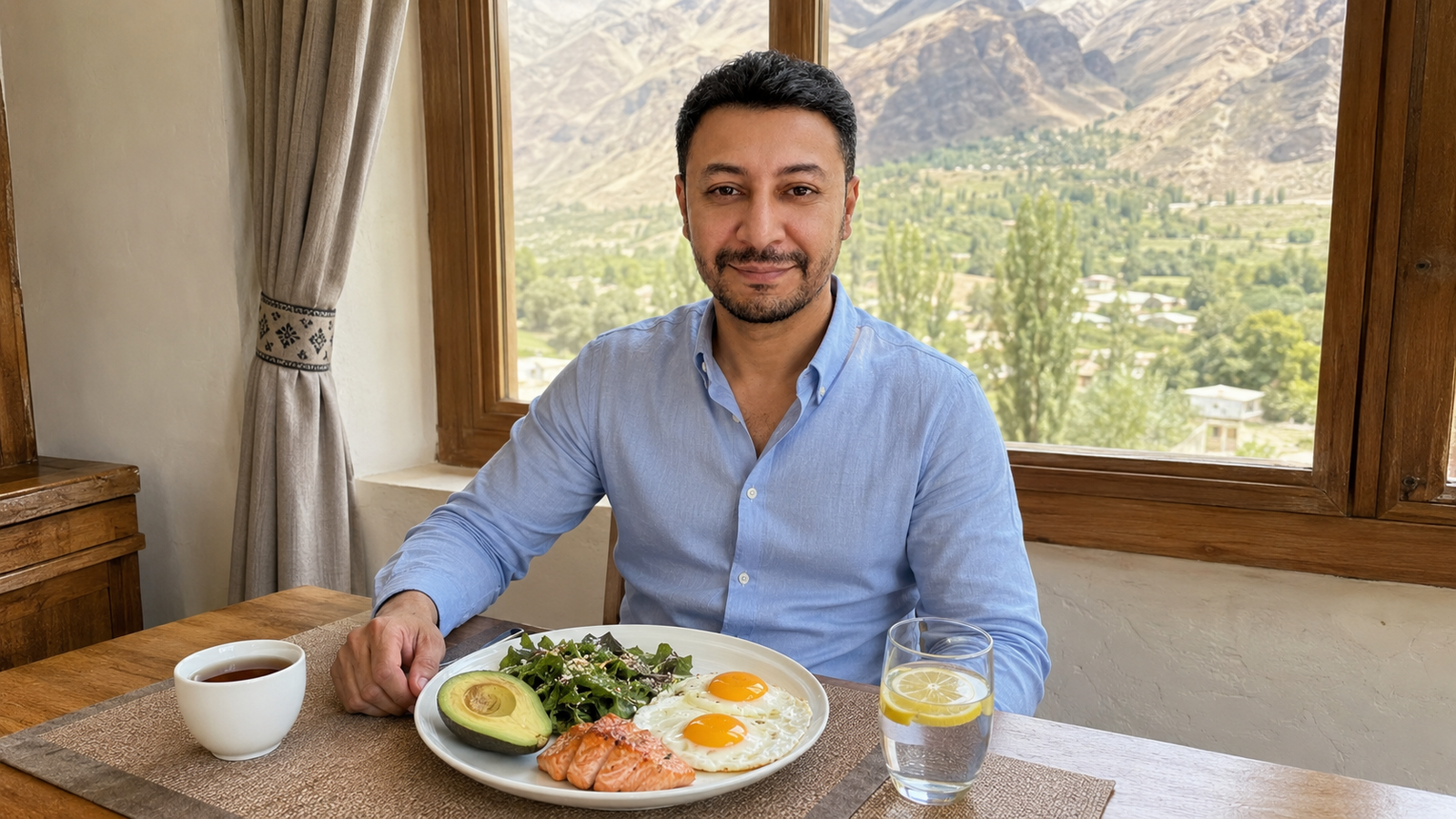
2 to 3 eggs cooked in butter, yolks intact. Half an avocado. A large handful of leafy greens dressed with extra virgin olive oil and a squeeze of lemon. Optional: a portion of salmon alongside. A white ceramic cup of black tea or coffee, still black.
Why it works: approximately 25 to 35 grams of protein depending on eggs and salmon, 20 to 25 grams of healthy fat from the avocado, butter, and olive oil, a small amount of fibre from the greens, and negligible refined carbohydrate. Insulin response is moderate and sustained. Satiety lasts three to four hours. The eating window starts calmly.
The quick first meal (5 minutes preparation)
Full-fat Greek yoghurt (200g, approximately 20 grams of protein). A small handful of mixed nuts (almonds, walnuts, or pecans). Optional: a small handful of berries. Black coffee or tea.
Why it works: high protein, good fat from the nuts, low refined carbohydrate, fast to prepare. Slightly less satiating than eggs and avocado but entirely adequate as a regular first meal. The berries add a small amount of natural sugar but the fat and protein in the yoghurt and nuts buffer the insulin response effectively.
The substantial first meal (for training days or longer eating windows)
Salmon fillet (150 to 200 grams, approximately 35 to 40 grams of protein) cooked in olive oil. A generous portion of leafy greens or a mixed salad with olive oil dressing. Half an avocado. Two eggs on the side.
Why it works: very high protein, high fat, zero refined carbohydrate. This meal is more than adequate for most people as a single first meal that sustains them through to a late second meal or dinner. Particularly useful on days when training falls near the end of the fasting window because it front-loads protein intake for muscle protein synthesis.
The light first meal (for people adapting to IF who find heavy protein difficult in the first weeks)
Two soft-boiled eggs. A small portion of cottage cheese. A few slices of cucumber and tomato. A glass of water with lemon.
Why it works: protein-forward but lighter in total volume. Some people find a very heavy first meal uncomfortable after a long fasting window in the early weeks of IF as the digestive system readapts to the eating window. This option provides sufficient protein and fat without being overwhelming.
What to Eat After Fasting: What to Avoid
As important as knowing the best food to break a fast is knowing what actively undermines the first meal.
High-sugar foods and drinks
Breaking the fast with fruit juice, sweetened yoghurt, flavoured smoothies, or high-sugar cereals produces the largest and fastest insulin spike of the eating window. Concentrated fructose from juice is processed directly by the liver and produces a glycaemic response that is difficult to buffer without fat or protein present. Starting the eating window this way creates a reactive hunger cycle within 60 to 90 minutes and largely cancels the appetite regulation benefit of the fasting window.
Ultra-processed carbohydrates
White bread, commercial cereals, pastries, crackers, rice cakes, and similar foods are digested rapidly and produce steep glucose curves. Even products marketed as healthy, such as low-fat granola or fruit-and-fibre cereals, are often high in refined carbohydrates and sugar. The processing strips the fibre and protein that would otherwise moderate the glucose response.
Very large meals immediately after extended fasting
After 16 to 18 hours of fasting, the digestive system has been at rest for an extended period. Eating an extremely large, heavy meal as the very first food of the eating window can cause discomfort, bloating, and energy dip as the digestive system ramps back up. The first meal does not need to be a feast. It needs to be adequate in protein and fat, moderate in volume, and well-composed. A substantial but not excessive first meal works better than trying to compensate for the fasting window with an enormous eating window meal.
Alcohol as a first food
Alcohol on an empty stomach after an extended fast is absorbed significantly faster than when consumed with food. The liver is simultaneously processing the residual products of fat oxidation from the fasting window. This is not a metabolic emergency, but it is worth noting that alcohol as a first post-fast food is not ideal for any purpose: metabolic, practical, or digestive.
How to Break a Fast: Specific Scenarios
Breaking the fast on a keto diet
If you are combining intermittent fasting with keto, the first meal after fasting is straightforward because the food choices naturally align. Keto foods are by definition low in carbohydrate and typically high in protein and fat. Eggs, avocado, fatty fish, leafy greens with olive oil, full-fat cheese: these all work perfectly as a first meal after fasting and produce the most measured insulin response of any eating pattern. The keto-IF combination is the version my wife and I both follow. The first meal at 12pm sets the tone for the entire eating window.
Breaking the fast on a standard diet
If you are not doing keto, the principles remain the same: protein and fat forward, minimal refined carbohydrate as the first food. The difference is that you have more flexibility with whole food carbohydrates later in the eating window. A first meal of eggs, avocado, and leafy greens followed by a second meal that includes sweet potato, legumes, or whole grains is entirely compatible with IF and produces good metabolic outcomes. The key is the order: protein and fat first, carbohydrates later in the eating window rather than as the opening meal.
Research published in PMC (Kamarul Zaman et al., 2023)[3] confirmed that substituting protein for carbohydrate in a frequent meal pattern results in tighter glycaemic control and reduced postprandial insulin responses compared to standard mixed meals. The finding applies directly to the first meal after fasting: lead with protein and fat, and the insulin response across the eating window is more controlled and sustained.
Breaking the fast on an exercise day
If you train near the end of the fasting window, within the hour before the eating window opens, break the fast within 30 to 60 minutes of finishing your session. Prioritise protein at 30 to 40 grams in the first meal to support muscle protein synthesis in the post-exercise window. Eggs with salmon or chicken provides this easily. Add carbohydrates in this first meal if you trained at high intensity: sweet potato, rice, or oats alongside the protein and fat provides the glycogen replenishment your muscles need without spiking insulin as severely as it would on a non-training day.
Breaking the fast after a shorter window (14:10)
After a 14-hour fast, the digestive and metabolic considerations are somewhat less acute than after an 18-hour fast. The insulin has been at baseline for fewer hours and the digestive system has had less complete rest. The same principles apply but with slightly more flexibility: a first meal that is protein-forward but includes a moderate amount of whole food carbohydrate (oats, fruit, or wholegrain toast) is fine at 14:10 in a way it would not be ideal at 18:6.
Frequently Asked Questions About How to Break a Fast
What is the best food to break a fast?
The best food to break a fast is protein and fat forward: eggs with avocado and leafy greens, salmon with olive oil dressing, or full-fat Greek yoghurt with mixed nuts. These foods produce a moderate, sustained insulin response and maintain satiety for three to four hours. The worst foods to break a fast with are high-sugar, high-refined-carbohydrate options: fruit juice, cereals, toast, pastries. These produce a large, rapid insulin spike that partially undoes the metabolic work of the fasting window and creates reactive hunger within 60 to 90 minutes.
What to eat after fasting if I have limited time to prepare?
Full-fat Greek yoghurt with a handful of mixed nuts requires no preparation and takes two minutes. It provides 20 to 25 grams of protein, good fat from the nuts, and minimal refined carbohydrate. Two or three hard-boiled eggs prepared in advance with an avocado is another no-preparation option. The principle is the same regardless of how quick the meal is: protein and fat first, refined carbohydrate last.
How long after the fast starts should I wait before eating?
Eat at your scheduled eating window opening time. There is no benefit to extending the fast further than your target window once the window opens. If you are on 16:8 and your eating window opens at 12pm, eat at 12pm. The fasting window has done its work. Extending it further without a specific reason simply delays nutrition without producing proportionally greater metabolic benefit, and may increase the risk of overeating later in the eating window from excess hunger.
Should I ease into eating gently after a long fast?
For standard daily IF windows of 14 to 18 hours, there is no medical need to ease in gently. Your digestive system has been resting, not shutting down, and it is fully capable of handling a normal meal at the opening of the eating window. The only caveat is portion size: starting with a moderately sized first meal rather than the largest meal of the day is more comfortable for most people, particularly in the first few weeks of IF. Extended fasting of 24 hours or more, which is outside standard daily IF, may warrant a gentler reintroduction, but that is a different context from a daily 16:8 or 18:6 practice.
Does the first meal after fasting affect the rest of the day?
Yes, significantly. The first meal sets the insulin baseline for the eating window. A protein and fat forward first meal produces a moderate insulin response that keeps appetite regulated for three to four hours and allows the second meal to be similarly measured. A high-carbohydrate first meal produces a large insulin spike followed by a drop that increases hunger within 60 to 90 minutes, making the eating window a constant cycle of eating and hunger rather than two or three satisfying meals. The first meal is genuinely the most impactful food decision of the eating window.
Can I break my fast with coffee or tea?
Black coffee and plain tea do not break a fast. They are fasting window tools, not eating window foods. When the eating window opens, the first food you eat is what breaks the fast. Coffee and tea in the morning are not the first meal. If you drink them during the fasting window, fine. At the eating window opening, eat food rather than continuing on coffee alone. Prolonged caffeine intake on an empty stomach, well past the natural eating window openi
How to Break a Fast: The Simple Version
Protein and fat first. Refined carbohydrate last or not at all in the first meal. Moderate volume. Eat at your scheduled window opening time.
That is how to end a fast properly. Four principles that take thirty seconds to remember and produce meaningfully better results across the eating window than a first meal built around convenience or habit.
The first meal is not complicated. Eggs, avocado, leafy greens with olive oil. Salmon. Full-fat yoghurt with nuts. These are the foods I open my eating window with almost every day. They take ten minutes to prepare. They keep me satisfied until the second meal three to four hours later. They set the tone for an eating window that works rather than one that fights itself.
The science behind why these foods work as a first meal after fasting is straightforward: protein and fat produce a measured insulin response in a system that is primed to respond strongly. Start measured. Stay measured. The eating window takes care of itself.
For the complete framework including fasting schedules, meal timing, and method comparisons, the intermittent fasting diet plan is the full guide. For what you can eat and drink throughout the fasting window before this meal arrives, the guide on what can you eat while intermittent fasting covers every option.
References
1. Sutton EF, Beyl R, Early KS, Cefalu WT, Ravussin E, Peterson CM. Early time-restricted feeding improves insulin sensitivity, blood pressure, and oxidative stress even without weight loss in men with prediabetes. PubMed, Cell Metabolism, 2018. https://pubmed.ncbi.nlm.nih.gov/29754952/
2. Shukla AP, Andono J, Touhamy SH, Casper A, Iliescu RG, Mauer E, Zhu YS, Ludwig DS, Aronne LJ. Carbohydrate-last meal pattern lowers postprandial glucose and insulin excursions in type 2 diabetes. PMC, BMJ Open Diabetes Research and Care, 2017. https://pmc.ncbi.nlm.nih.gov/articles/PMC5604719/
3. Kamarul Zaman M, Chin KY, Othman F, et al. Alteration of postprandial glucose and insulin concentrations with meal frequency and composition. PMC, 2023. https://pmc.ncbi.nlm.nih.gov/articles/PMC10315062/