
The first time I tried intermittent fasting for beginners I made every mistake in the first three days and nearly gave up before anything had a chance to work.
I skipped breakfast and spent the morning feeling terrible. I had a headache by 11am. I was irritable by 1pm. I ate an enormous lunch that made me feel worse. By day three I was convinced intermittent fasting was not for me.
What I did not know was that I was managing it completely wrong. I was not drinking enough water. I was not taking electrolytes. I was not eating the right foods when I did eat. And I had jumped straight to a long fasting window on day one when I should have started with 14:10.
Intermittent fasting for beginners does not have to be that hard. When I started again properly, and later when my wife started alongside me, those first few days were entirely manageable because we followed a sensible starting approach. She went on to lose 5kg. I lost my belly fat and got my energy back at 38. This is the guide I wish I had followed the first time.
If you want to understand the science behind why intermittent fasting works before you start, the guide on what is intermittent fasting covers the full mechanism. The complete framework is in the intermittent fasting diet plan. This article is specifically for starting intermittent fasting as a complete beginner, step by step, day by day.
Intermittent Fasting for Beginners: The Right Way to Start
The single most common mistake with intermittent fasting for beginners is starting too aggressively. You read about 16:8 or 18:6, it sounds straightforward, you jump straight in on day one, and by day three you feel terrible and conclude that fasting is not for you.
It is for you. You just started at the wrong place.
Intermittent fasting for beginners should always begin with the gentlest protocol: 14:10. Fourteen hours of fasting and ten hours of eating. If you stop eating after dinner at 8pm and have your first meal at 10am the next morning, you are doing 14:10. That is the starting point. Not 16:8. Not 18:6. 14:10.
The reason this matters is adaptation. Your hunger hormones, particularly ghrelin, are trained to expect food at the times you usually eat. When you suddenly stop eating in the morning, ghrelin rises at your usual breakfast time and produces real, uncomfortable hunger. That hunger fades significantly within five to seven days as your body adjusts to the new pattern. Starting at 14:10 makes those five to seven days manageable. Starting at 18:6 makes them miserable. This is not a research finding, it is what I lived through twice, the hard way the first time and the easy way the second.
What the research does tell us is that you do not lose anything by easing in. A randomised controlled trial published in PMC (Cienfuegos et al., Cell Metabolism, 2020) found that short eating windows produced significant reductions in body weight, insulin resistance, and energy intake in adults with obesity, with participants naturally eating around 550 fewer calories per day without any calorie counting at all. [1] In other words, the benefits come from the consistent fasting window itself, not from forcing the longest window on day one. Start gentle. Progress steadily. The results catch up.
How to Start Intermittent Fasting: The Week by Week Plan
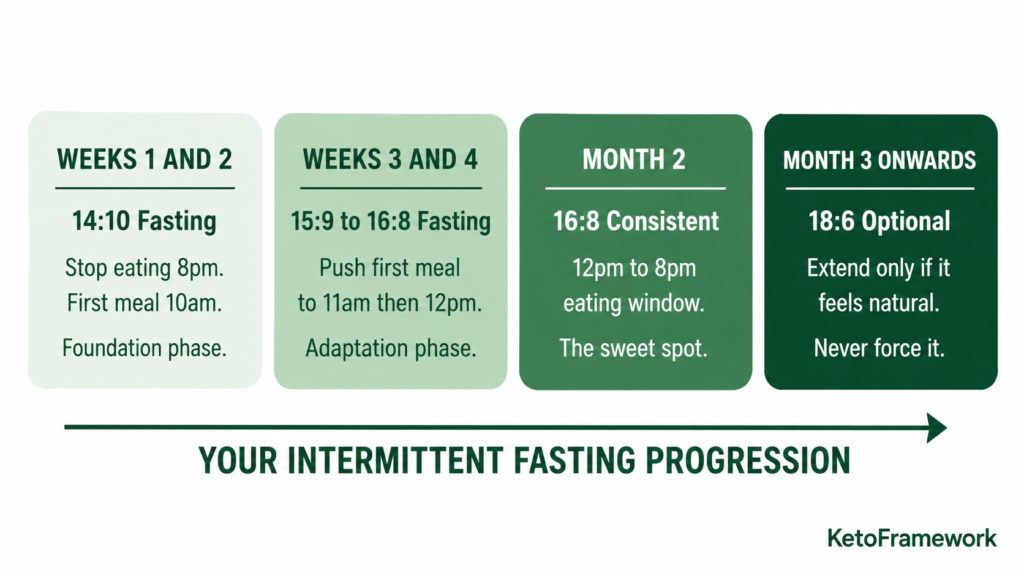
Here is exactly how to start intermittent fasting as a complete beginner. This is the schedule I would follow if I were starting from scratch today, and very close to what my wife and I both followed.
The beginner intermittent fasting schedule
Weeks 1 and 2: 14:10 fasting. Stop eating at 8pm. First meal at 10am. This is your foundation.
Weeks 3 and 4: 15:9 or 16:8 fasting. Push the first meal back to 11am or 12pm. One hour at a time.
Month 2: 16:8 consistently. Eating window 12pm to 8pm. This is the sweet spot for most people.
Month 3 onwards: Stay at 16:8 or extend to 18:6 if it feels natural. Never force the extension.
Weeks 1 and 2: Starting intermittent fasting with 14:10
Your only job in the first two weeks of starting intermittent fasting is to establish the habit of not eating before 10am and finishing your last meal by 8pm. Nothing else. Do not change what you eat yet. Do not start counting calories. Just move the boundaries of your eating window and let your body adapt.
The first three to four mornings you will feel the hunger at the time you usually eat. This is ghrelin responding to its trained schedule. It typically rises around the time you normally eat and then subsides within 30 to 45 minutes. Drink a glass of water or a cup of black tea or coffee. The hunger passes.
By day five to seven of starting intermittent fasting, the morning hunger will have reduced noticeably for most people. By day ten it is often largely gone. My wife noticed the morning hunger drop significantly by day five. Mine took until day seven. Both timelines are normal. The body has adapted to the new eating window and stopped sending strong hunger signals during the fasting period.
Weeks 3 and 4: Extending to 16:8
Once 14:10 feels comfortable and the morning hunger has settled, push the first meal back by one hour to 11am. Do this for three to four days. Then push to 12pm. You have now moved to 16:8 without a single difficult day because the adaptation happened gradually.
This progression in how to start intermittent fasting is deliberate. The adaptation that makes fasting easy happens in layers. Each extension of the fasting window triggers a small new adjustment that, given a few days, becomes comfortable. Jumping straight to the end goal skips those layers and makes the process harder than it needs to be.
Month 2: Settling into 16:8 consistently
Month two is where intermittent fasting for beginners starts to feel natural rather than effortful. The eating window of 12pm to 8pm becomes your default. You stop thinking about the fasting window because it runs mostly while you are sleeping and working. The hunger that dominated the first week has been largely replaced by stable energy and, for most people, a reduced desire to eat in the morning that they did not expect. This is roughly where both my wife and I settled before later moving to 18:6.
The Intermittent Fasting Beginner Guide to the First Week: Day by Day
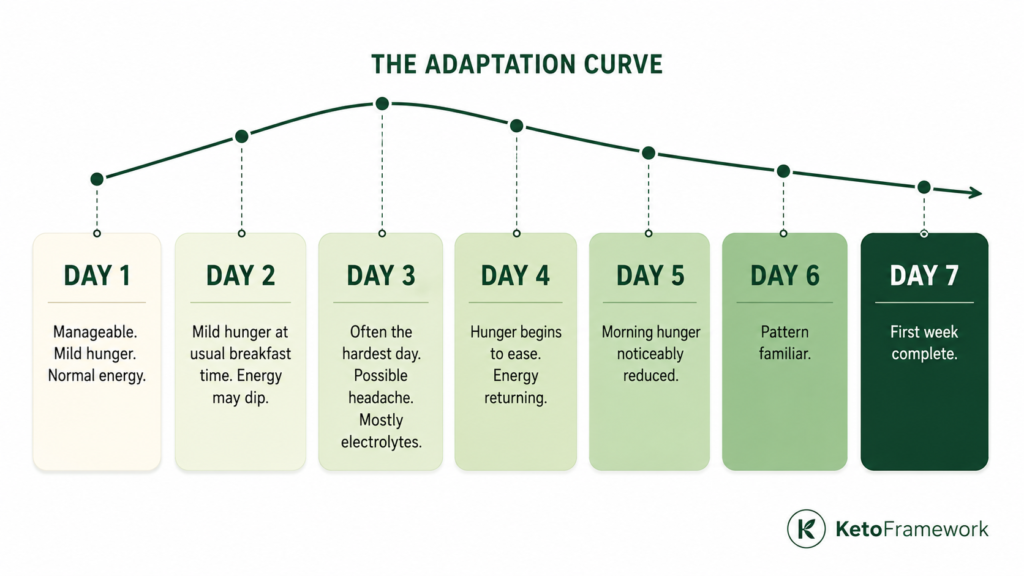
Your intermittent fasting first week will have a distinct pattern. Understanding it in advance means you will not misread normal adaptation symptoms as signs that something is wrong. This is exactly the pattern I went through, and watching for it is what got me through the second time.
| Day | What Typically Happens | What to Do |
| Day 1 | The day feels manageable. The change is small enough that hunger is mild. Energy is normal. | Drink a large glass of water first thing. Add a pinch of sea salt. Have black tea or coffee if you drink it. Note the time of your first meal. |
| Day 2 | Mild hunger appears at your usual breakfast time. This is ghrelin responding to its trained schedule. Energy may dip slightly. | Same as day one. The hunger typically rises and passes within 30 to 45 minutes without food. Do not eat early. Drink water. |
| Day 3 | Often the hardest day of the intermittent fasting first week. Hunger may be stronger. Some people experience mild headaches or low energy. | This is primarily electrolyte depletion. Add sea salt to water twice today. Take magnesium glycinate before bed. Read the electrolytes guide. |
| Day 4 | For most people the hunger begins to ease. The body is adapting. Energy starts to return. | Continue the same schedule. The improvement from day three to day four is often noticeable and encouraging. |
| Day 5 | Hunger at the fasting window is noticeably reduced. Some people report stable energy throughout the morning for the first time. | Start paying attention to how you feel at the time you would normally have eaten breakfast. The difference from day two is the adaptation happening. |
| Day 6 and 7 | The pattern is becoming familiar. Morning hunger is manageable or has largely resolved. Some people report mental clarity beginning in the late morning fasting window. | You have completed your intermittent fasting first week. The hard part is over. Continue 14:10 for one more week before extending the window. |
Starting Intermittent Fasting: The Four Things That Make or Break the First Month

1. Electrolytes from day one
The number one reason people struggle with starting intermittent fasting in the first week is electrolyte depletion. During the fasting window your kidneys excrete more sodium. Sodium depletion pulls magnesium and potassium with it. The headaches, fatigue, and brain fog that many beginners experience in the first week are almost entirely this mechanism, not starvation. This was exactly what ruined my first attempt, and I had no idea at the time.
The fix is simple and cheap. A quarter teaspoon of sea salt in a large glass of water first thing in the morning during the fasting window. Magnesium glycinate (200 to 400mg) before bed every night. Avocado during the eating window for potassium. Those three things prevent most first-week IF symptoms. The full protocol is in the electrolytes on keto guide, which applies completely to IF whether you are doing keto or not.
2. Eating enough during the eating window
Intermittent fasting for beginners does not mean eating less overall. It means eating within a shorter window. One of the most common mistakes when starting intermittent fasting is eating too little during the eating period, which creates a large total calorie deficit, raises cortisol, and makes the next fasting window significantly harder.
Eat two to three proper meals during your eating window. Prioritise protein at every meal (aim for at least 30 grams), healthy fats, and plenty of vegetables. Do not treat the eating window as something to minimise. Treat it as the time you fuel your body properly for the fasting hours ahead.
3. Eating the right foods when you break the fast
How you break your fast matters. After 14 to 16 hours without food, insulin is at its lowest point of the day. The first meal you eat will trigger the largest insulin response of the day. If that meal is high in refined carbohydrates or sugar, the insulin spike is large and fast, which counteracts some of the metabolic benefit of the fasting window.
The IF diet for beginners first meal should be protein and fat forward. Eggs and avocado. Salmon with leafy greens dressed with olive oil. Full-fat yoghurt with nuts. These foods produce a moderate insulin response, maintain satiety for three to four hours, and set the metabolic tone for the eating window. A bowl of cereal or toast with jam does the opposite.
4. Not quitting on day three
Day three of the intermittent fasting first week is the most common quit point, and it was nearly mine. The novelty of starting has worn off. The adaptation is not yet complete. Hunger is at its peak. Electrolytes are depleted if you have not been managing them. Everything feels harder than it should.
Day three is not a sign that IF does not work for you. It is the peak of the adaptation curve. Day four is almost always noticeably easier. Day seven is genuinely manageable. Day fourteen is often the first morning you wake up and realise you are not actually hungry in the morning anymore and do not quite know when that happened.
This is also where the research lines up with experience. A supervised controlled trial published in PubMed (Sutton et al., Cell Metabolism, 2018) demonstrated for the first time in humans that early time-restricted eating improved insulin sensitivity, blood pressure, oxidative stress, and appetite, and that these benefits were not solely due to weight loss. [2] The appetite improvement is the part beginners feel: stay consistent through the hard early days and your body genuinely recalibrates how hungry it feels. If you are on day three and struggling, you are right on schedule. Keep going.
The IF Diet for Beginners: What to Eat and When
The IF diet for beginners is not a specific meal plan. It is a timing framework you apply to sensible eating. Here is how I structure my eating window on a typical day and what I recommend to every beginner starting intermittent fasting.
| Time | What I Eat | Why This Works for IF |
| Fasting window (8pm to 12pm) | Water, black coffee, herbal tea, sparkling water with lemon, sea salt in water for electrolytes | None of these raise insulin. The fasting window stays metabolically intact. |
| 12pm, break the fast | Eggs (2 to 3) cooked in butter, a handful of leafy greens, half an avocado, black tea or coffee | Protein and fat forward. Moderate insulin response. High satiety for the next 3 to 4 hours. |
| 3pm, second meal or snack | Salmon fillet with leafy green salad dressed with olive oil, or full-fat yoghurt with a handful of mixed nuts | Maintains protein intake. Keeps hunger suppressed into the evening. |
| 6pm to 7pm, final meal | Whatever is being cooked at home that evening. I do not restrict this meal but prioritise protein and avoid refined carbohydrates most evenings. | The final meal closes the eating window. Protein at dinner supports overnight muscle protein synthesis. |
| After 8pm, fasting window begins again | Water, herbal tea only | The fasting window starts. No food until the next eating window. |
You do not need to follow this exactly. The principle is: prioritise protein and fat at the first meal of the eating window, eat two to three proper meals within the window, and close the window cleanly at the same time each day. Consistency in the timing is what produces the adaptation that makes IF sustainable.
Intermittent Fasting First Week Mistakes: What to Avoid
These are the mistakes I made in my intermittent fasting first week. I am listing them so you do not have to make them yourself.
| Mistake | Why It Happens | What to Do Instead |
| Starting with 18:6 on day one | Excitement about results leads to jumping to the most advanced protocol immediately | Start with 14:10 for two weeks. The results catch up. The experience is far more manageable. |
| Not drinking enough water | Forgetting that the fasting window requires active hydration without the water content from food | Drink at least 2 litres during the fasting window. Water first thing in the morning before anything else. |
| Skipping electrolytes | Not knowing that fasting increases sodium excretion | Sea salt in water every morning of the fasting window. Magnesium glycinate before bed. This single change resolves most first-week symptoms. |
| Breaking the fast with high-carb food | Hunger from the fasting window makes any food appealing and familiar comfort foods feel urgent | Prepare your first meal in advance. Know exactly what you are eating at 10am or 12pm before the fasting window ends. |
| Eating too little during the eating window | Treating IF as a starvation diet rather than a timing approach | Eat proper full meals during the eating window. Two to three meals with adequate protein. Do not skip meals within the window. |
| Judging the diet on day three | Day three is the hardest day for most beginners and feels like evidence the approach does not work | Wait until day ten before forming any opinion. The adaptation curve peaks at day three and improves noticeably by day five. |
| Drinking coffee with milk during the fasting window | Not knowing that milk raises insulin and breaks the fast | Black coffee or plain tea only during the fasting window. If you cannot drink it plain, herbal tea is the alternative. |
Questions Beginners Ask Me Most About Starting Intermittent Fasting
What is the best intermittent fasting schedule for beginners?
14:10 is the best starting schedule for intermittent fasting for beginners without exception. Stop eating at 8pm and have your first meal at 10am. This extends your overnight fast by about two hours from each end and is manageable from day one for most people. After two weeks of consistent 14:10, you will know whether to extend to 16:8 or stay where you are. Do not start with 16:8 or 18:6 on day one. The adaptation process is real and skipping it makes the first week significantly harder than it needs to be.
How do I start intermittent fasting without feeling terrible?
How to start intermittent fasting without feeling terrible comes down to three things: start with 14:10 not 16:8, manage electrolytes from day one, and eat proper meals during the eating window. Most of the terrible feelings in the first week of starting intermittent fasting are electrolyte depletion from the increased sodium excretion that comes with fasting. A pinch of sea salt in water each morning and magnesium glycinate before bed resolves this almost completely. The remaining discomfort is ghrelin adapting to a new schedule, which takes five to seven days and is genuinely manageable once you know it is happening and why. I learned all of this the hard way so you do not have to.
What can I have during the fasting window as a beginner?
During the fasting window: water, black coffee with nothing added, plain herbal tea, plain green tea or black tea, sparkling water, water with a squeeze of lemon, and plain electrolyte powder with no sugar. Nothing else. Milk breaks the fast because it raises insulin. Cream breaks the fast for the same reason. Sugar breaks the fast. Even a small amount of calories from these sources is enough to interrupt the low-insulin state that is the purpose of the fasting window. Black coffee and plain tea are your most powerful allies during the intermittent fasting beginner phase because they are mild appetite suppressants and do not raise insulin.
Will I lose weight in my intermittent fasting first week?
In your intermittent fasting first week you will likely see a reduction on the scale, but most of it will be water from glycogen depletion and reduced water retention from lower insulin. This is real and visible but it is not pure fat loss. Real fat loss from intermittent fasting for beginners typically becomes measurable from week two or three onwards as the metabolic adaptation completes and fat oxidation increases. The first-week weight loss is encouraging, but do not measure the success of starting intermittent fasting by week-one numbers alone.
Can I combine intermittent fasting for beginners with keto?
Yes, and the combination works very well because both approaches lower insulin through different mechanisms. Keto lowers insulin by removing carbohydrates. Intermittent fasting lowers insulin by extending the gap between meals. Combined, they produce faster entry into ketosis, better fat oxidation, and stronger appetite suppression than either alone. However, for a true beginner I recommend starting one at a time rather than both at once. Start with either keto or IF for two to four weeks, let one adaptation complete, and then add the second. This is exactly how my wife and I did it, keto first, then IF.
How long before intermittent fasting for beginners starts showing results?
As a beginner starting intermittent fasting, you will typically notice changes in this order: reduced morning hunger by day five to seven, more stable energy by week two, noticeable reduction in afternoon snacking by week two to three, visible fat loss beginning by week three to four. The appetite changes arrive first and they are often the most striking for people who have spent years thinking about food constantly. The weight change follows. Most beginners who stick with intermittent fasting for eight weeks report results that exceed what they expected from simply changing when they eat.
Intermittent Fasting for Beginners: The Most Important Thing
The most important thing about starting intermittent fasting as a beginner is not which protocol you choose or what you eat during the eating window. It is consistency.
Intermittent fasting for beginners works through adaptation, and that adaptation requires consistent practice over days and weeks. A perfect 18:6 schedule done for three days and then abandoned produces nothing. A sustainable 14:10 schedule done consistently for four weeks produces real, measurable change. I know this because the abandoned version is exactly what I did the first time, and the consistent version is what finally worked for both my wife and me.
Start with 14:10. Manage your electrolytes. Eat proper meals during the eating window. Do not quit on day three. Extend to 16:8 when 14:10 feels natural, not before.
That is the complete intermittent fasting beginner guide. Everything else is detail that becomes relevant once the foundation is established.
The complete framework with meal plans, method comparisons, and the full schedule progression is in the intermittent fasting diet plan. For the electrolyte protocol that makes the first week manageable, the electrolytes guide covers the full daily protocol. And if you want to combine IF with keto from the start, the keto diet for beginners 30-day guide is the natural companion to this one.
References
All sources cited in this article are peer-reviewed studies sourced from PubMed or PMC. This article is for informational purposes and does not constitute medical advice. If you are pregnant or breastfeeding, have a history of disordered eating, take medication that requires food, or have any existing health condition, consult your doctor before starting intermittent fasting.
1. Cienfuegos S, Gabel K, Kalam F, et al. Effects of 4- and 6-h time-restricted feeding on weight and cardiometabolic health: a randomized controlled trial in adults with obesity. PMC, Cell Metabolism, 2020. https://pmc.ncbi.nlm.nih.gov/articles/PMC9407646/
2. Sutton EF, Beyl R, Early KS, Cefalu WT, Ravussin E, Peterson CM. Early time-restricted feeding improves insulin sensitivity, blood pressure, and oxidative stress even without weight loss in men with prediabetes. PubMed, Cell Metabolism, 2018. https://pubmed.ncbi.nlm.nih.gov/29754952/
3. Tinsley GM, La Bounty PM. Effects of intermittent fasting on body composition and clinical health markers in humans. PubMed, Nutrition Reviews, 2015. https://pubmed.ncbi.nlm.nih.gov/26374764/