
If you’re new to low-carbohydrate eating, this keto diet for beginners guide will walk you through your first 30 days step by step. Starting keto can feel overwhelming at first — what to eat, what to avoid, how many carbs are allowed, and what results to expect.
The key to success isn’t extreme restriction. It’s structured adjustment.
This guide includes:
- A week-by-week breakdown
- A simple grocery list
- Common beginner mistakes
- Realistic expected results
By the end, you’ll have a clear roadmap for your first month on keto.
What Is the Keto Diet? (Quick Refresher)
The ketogenic diet is a low-carbohydrate, moderate-protein, high-fat eating approach designed to shift your body into ketosis — a metabolic state where fat becomes the primary fuel source instead of glucose.
Most beginners aim for:
- 70–75% fats
- 20–25% protein
- 5–10% carbohydrates
- 20–50g net carbs per day
If you want a deeper scientific explanation of how ketosis works, see our complete Keto Diet Plan guide.
Now let’s break down your first 30 days.
Week-by-Week Breakdown

Week 1: Transition & Carb Reduction
Focus: Lower carbohydrates gradually and prepare your body.
What to Do:
- Remove bread, rice, pasta, sugar, and processed snacks.
- Replace them with low-carb vegetables.
- Start increasing healthy fats (olive oil, avocado, butter).
- Drink more water than usual.
- Add electrolytes (salt your food properly).
What You May Feel:
- Headaches
- Fatigue
- Brain fog
- Increased thirst
This is often called the “keto flu.” It’s temporary and usually caused by electrolyte imbalance and glycogen depletion.
Goal of Week 1:
Get carbs down to 20–50g daily and begin shifting toward fat as fuel.
Free Keto Recipe Ebook for Beginners
Start your keto journey with our easy keto recipe guide designed for simple meal planning and sustainable fat loss. This free ebook includes breakfast, lunch, dinner, and snack recipes with macro breakdowns so you can stay in ketosis without the guesswork.
Download the guide and start cooking delicious low-carb meals today.
Week 2: Entering Ketosis
Focus: Stabilization and adaptation.
By now, your glycogen stores are mostly depleted, and your body is beginning to produce ketones more efficiently.
What to Do:
- Keep carb intake consistent.
- Avoid “just one bite” of high-carb foods.
- Maintain moderate protein (don’t overeat protein).
- Continue electrolyte support.
What You May Notice:
- Reduced hunger
- More stable energy
- Slight weight drop (mostly water weight)
- Possible fruity breath (acetone)
Goal of Week 2:
Maintain consistency. Avoid hidden carbs. Let your body adapt.
Week 3: Fat Adaptation Begins
Focus: Improved energy and appetite control.
Your body is becoming better at using fat and ketones for fuel.
What to Do:
- Simplify meals (protein + fat + low-carb vegetable).
- Avoid “keto junk foods.”
- Prioritize whole foods.
- Begin light exercise if energy allows.
What You May Notice:
- Improved mental clarity
- Fewer cravings
- More controlled appetite
- Better focus
Goal of Week 3:
Establish routine and meal structure.
Week 4: Optimization & Routine Building
Focus: Sustainability.
By week four, keto should feel more natural.
What to Do:
- Track progress (weight, measurements, energy levels).
- Evaluate how you feel.
- Refine grocery list.
- Experiment with simple meal variations.
What You May Notice:
- More stable energy
- Improved digestion
- Reduced bloating
- Steady fat loss (if calorie balance is appropriate)
Goal of Week 4:
Transition from “trying keto” to making it a structured lifestyle.
Simple Keto Grocery List for Beginners
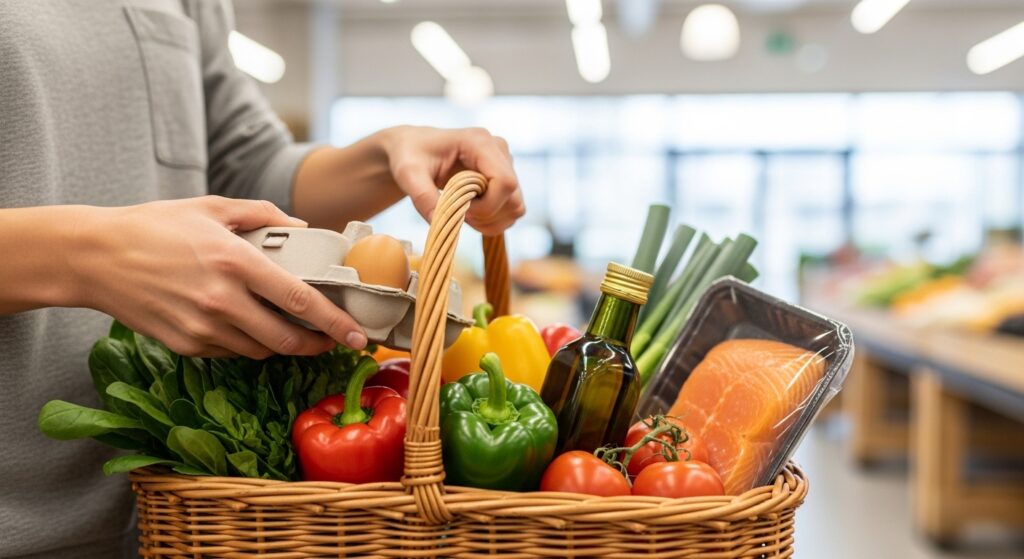
Here’s a practical grocery list to simplify your first 30 days.
Proteins
- Eggs
- Chicken thighs
- Ground beef
- Salmon
- Sardines
- Turkey
- Lamb
Healthy Fats
- Olive oil (extra virgin)
- Avocados
- Butter or ghee
- Coconut oil
- Nuts (almonds, walnuts)
- Seeds (chia, flax)
Low-Carb Vegetables
- Spinach
- Broccoli
- Zucchini
- Cauliflower
- Courgettes
- Bell peppers
- Cucumber
- Asparagus
Dairy (Full-Fat)
- Cheese
- Greek yogurt (unsweetened)
- Heavy cream
Pantry Basics
- Salt (important for electrolytes)
- Black pepper
- Garlic
- Herbs
- Apple cider vinegar
Sample 1-Day Beginner Meal Plan
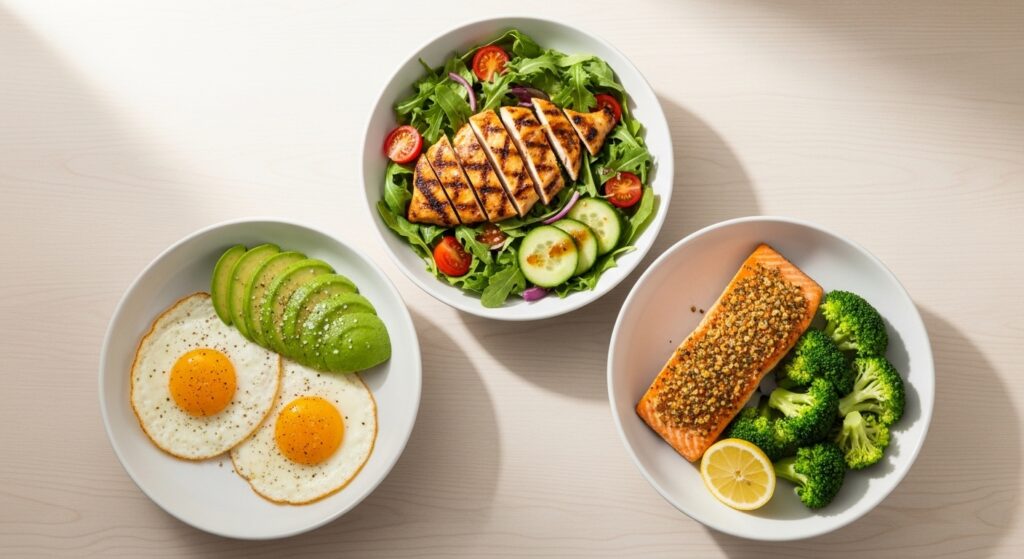
Breakfast:
Eggs cooked in olive oil with spinach and avocado.
Lunch:
Grilled chicken salad with leafy greens, feta cheese, olive oil dressing.
Dinner:
Baked salmon with roasted broccoli and butter.
Snack (if needed):
Handful of almonds or full-fat Greek yogurt.
Simple meals work best during your first 30 days.
Common Keto Beginner Mistakes

Understanding these mistakes will dramatically increase your success.
1. Eating Too Much Protein
Many beginners assume keto is a high-protein diet. It’s not.
Excess protein can convert to glucose and slow ketosis. Keep protein moderate.
2. Not Eating Enough Fat
If you reduce carbs but don’t increase fat, you may feel tired and hungry.
Fat is your new primary fuel source.
3. Ignoring Electrolytes
Low sodium, potassium, and magnesium cause most “keto flu” symptoms.
Salt your food properly and stay hydrated.
4. Eating Processed “Keto” Products
Keto snacks often contain hidden carbs and inflammatory oils.
Stick to whole foods during your first 30 days.
5. Expecting Instant Fat Loss
Week 1 weight loss is mostly water.
Sustainable fat loss takes time and consistency.
6. Not Tracking Hidden Carbs
Sauces, dressings, and packaged foods can contain sugar.
Read labels carefully.
Expected Results After 30 Days

Results vary depending on:
- Starting weight
- Metabolic health
- Calorie intake
- Activity level
- Hormonal balance
However, many beginners experience:
1. Weight Loss
2–6 kg (including water weight) in the first month is common.
2. Reduced Appetite
Fewer cravings and longer periods between meals.
3. Stable Energy
Less afternoon crash compared to high-carb diets.
4. Reduced Bloating
Lower carbohydrate intake often reduces water retention.
5. Improved Blood Sugar Stability
Especially for those with insulin resistance (with medical supervision).
Is the Keto Diet Safe for Beginners?

For most healthy individuals, keto is safe when:
- Nutrient intake is balanced
- Whole foods are prioritized
- Electrolytes are managed
- Medical conditions are considered
Consult a healthcare professional if you have:
- Type 1 diabetes
- Kidney disease
- Liver conditions
- Pregnancy or breastfeeding
Should Beginners Count Calories?
In the first 30 days:
Focus on:
- Carb control
- Meal structure
- Consistency
If fat loss stalls after adaptation, calorie awareness may help.
Final Thoughts: Your First 30 Days Matter Most
Starting a keto diet for beginners doesn’t require perfection — it requires structure.
Your first 30 days are about:
- Reducing carbohydrates
- Supporting ketosis
- Avoiding common mistakes
- Building consistent habits
If you stay consistent, manage electrolytes, and focus on whole foods, your body will gradually adapt to using fat as fuel.
Remember:
Keto is not about starving yourself.
It’s about changing how your body generates energy.
And once that shift happens, the process becomes far more sustainable.
If you have questions about starting a ketogenic lifestyle or need help understanding this keto food list, feel free to contact us and we’ll be happy to help.