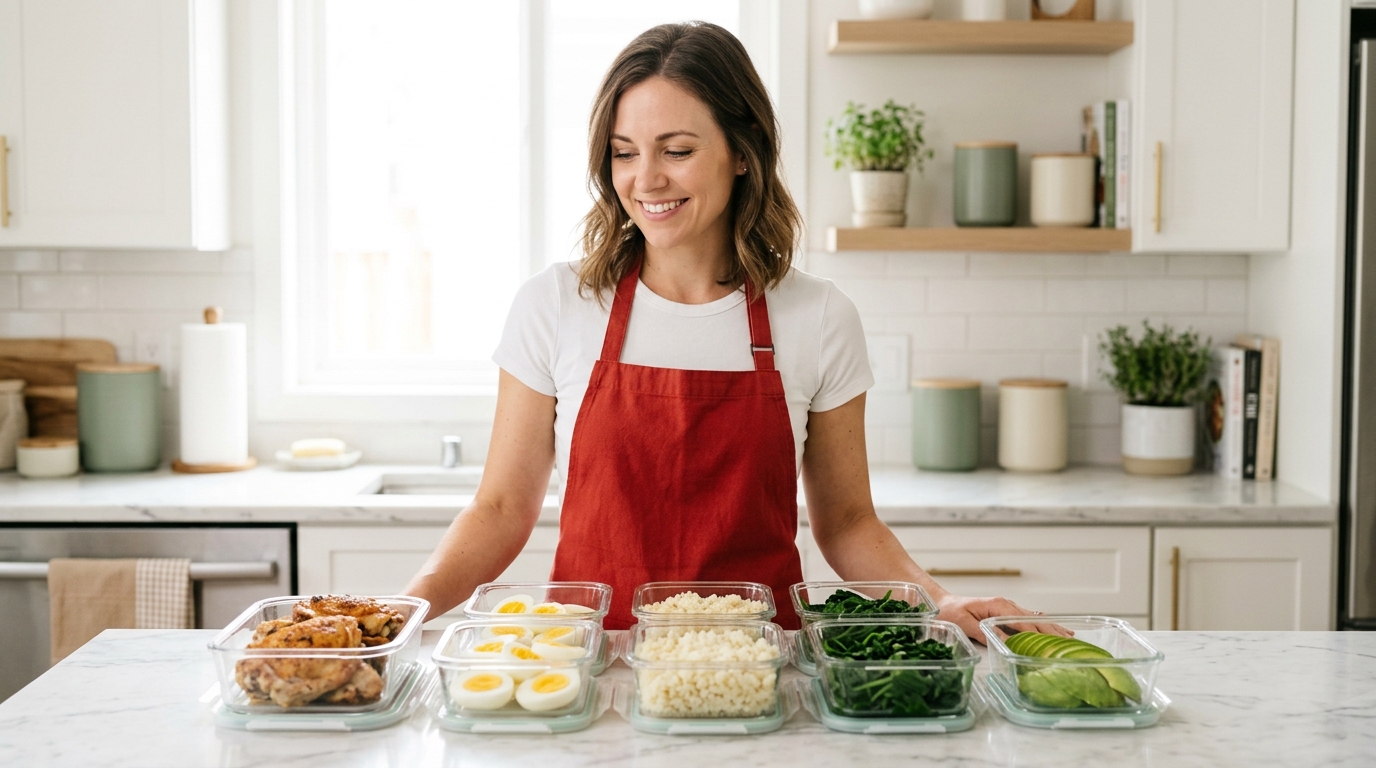
Keto meal prep for beginners is less about cooking elaborate dishes and more about removing the daily decision of what to eat. When you walk to the fridge on a Tuesday evening and find cooked chicken thighs, roasted vegetables, washed leafy greens, and portioned nuts already waiting, staying in ketosis is effortless. When the fridge is empty and the day has been long, the easiest option wins, and that option is rarely keto-friendly.
This guide covers how to build a practical keto meal prep routine from scratch: what to batch cook, how to structure your prep session, which containers to use, how long everything keeps, and what order to work in so a full week of meals is ready in under two hours. No specialist equipment required. No complex recipes. Just the core strategy that makes keto sustainable beyond the first three weeks.If you are still building your keto kitchen from scratch, the keto pantry essentials guide covers every ingredient to stock before your first prep session. And for the full framework that this meal prep supports, the complete keto diet plan is the right starting point.
Why Keto Meal Prep for Beginners Changes Everything
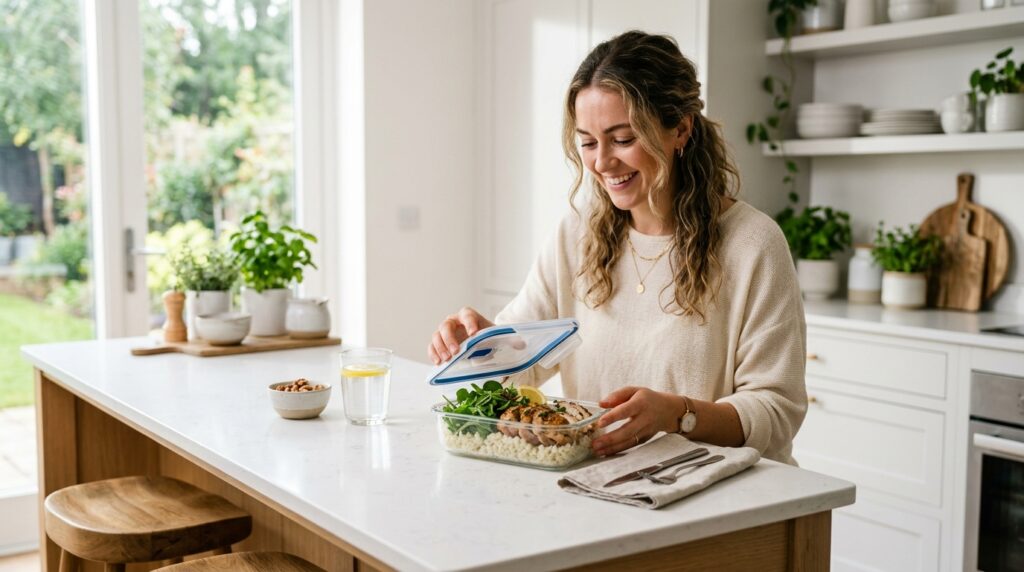
The biggest obstacle to sustaining keto is not hunger or cravings. It is the friction of decision-making at the moment you are hungry and tired. When there is nothing ready to eat, the path of least resistance is not keto. Meal prep removes that friction entirely.
A large cross-sectional study published in PMC (Ducrot et al., 2017) of 40,554 adults in the NutriNet-Sante cohort found that individuals who planned their meals ahead of time were significantly more likely to achieve better dietary quality, greater food variety, and lower body weight compared to those who did not plan. [1] The research suggests meal planning is one of the most effective and underused tools for dietary adherence, independent of what the diet actually is.
The evidence on home cooking reinforces this further. A UK population study published inPMC (Mills et al., 2017) of 11,396 adults found that consuming home-cooked meals more frequently was strongly associated with better overall diet quality, lower BMI, and better cardiometabolic markers. The greatest benefits appeared at the highest frequencies of home cooking, reinforcing that consistency matters more than any individual meal quality.[2]For keto specifically, the case is even stronger. Every meal you prepare at home is a meal where you control exactly what goes into it. Hidden carbs in restaurant food, sauces, dressings, and ready meals are one of the most common reasons keto stops working for beginners who believe they are eating correctly. Meal prepped food at home has no hidden carbs because you put every ingredient in yourself. See the full list of foods that catch beginners out in the guide on hidden carbs in food.
The Keto Batch Cooking System: What to Prep and Why
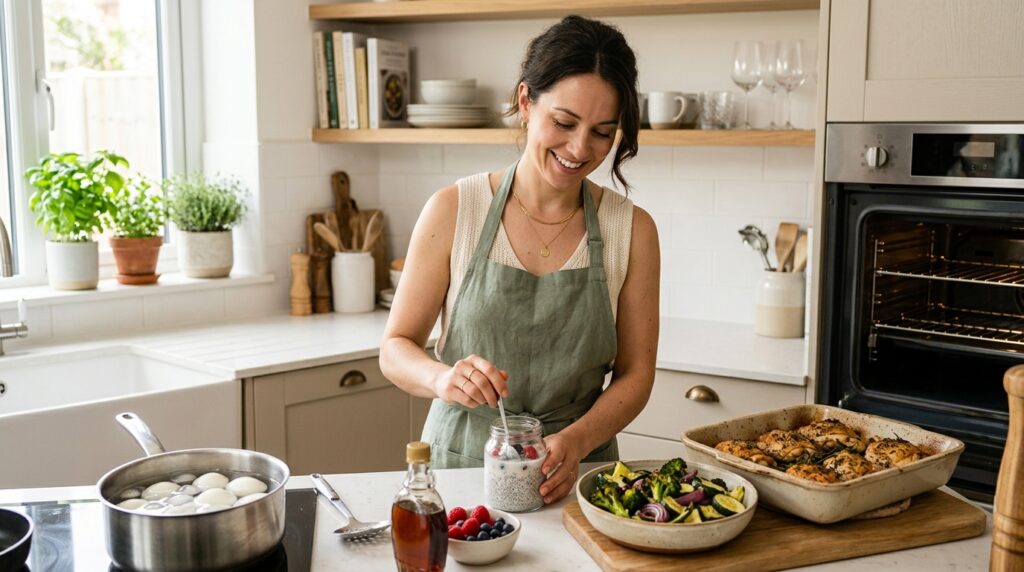
The most effective keto meal prep system is built around components rather than complete meals. Instead of preparing seven separate breakfasts, seven lunches, and seven dinners, you prepare the building blocks that assemble into any meal you need throughout the week.
A component-based system has three advantages over full meal prep. It prevents food fatigue because the same components can be combined differently each day. It reduces prep time because you are cooking in bulk rather than individually. And it gives you flexibility on any given day to eat more or less of any component depending on hunger levels, which is particularly relevant on keto where appetite naturally fluctuates as ketosis deepens.
Core component 1: Proteins
Batch cook two or three protein sources in one session. Proteins are the most time-consuming element to prepare daily and the most important to have ready. They also keep the longest in the fridge, making them the anchor of any keto batch cooking guide.
| Protein | Batch method | Fridge life | Versatility |
| Chicken thighs (skin-on) | Roast at 200C for 35-40 mins, season with salt and herbs | 4-5 days | Slice cold over salads, reheat with cauliflower rice, shred into soups |
| Hard-boiled eggs | Boil 10-12 minutes, cool in cold water, store unpeeled | 7 days | Breakfast, snacks, salad topping, devilled eggs |
| Beef or lamb mince | Brown with garlic, season, drain excess fat | 4 days | Bowl meals, cauliflower rice base, lettuce wraps |
| Salmon fillets | Bake at 200C for 12-15 mins, cool before refrigerating | 3 days | Cold over salads, hot with greens, flaked into omelettes |
| Bacon | Pan-fry or oven-bake a full pack at once | 5 days | Breakfast, salad topping, wraps, egg dishes |
| Prawns | Stir-fry quickly with butter and garlic, cool immediately | 3 days | Salads, cauliflower rice bowls, quick lunches |
Core component 2: Cooked vegetables
Roasted vegetables keep for four to five days and transform any combination of protein and greens into a complete meal. Cauliflower rice is the most versatile keto prep-ahead vegetable and takes just five minutes to batch-cook.
| Vegetable | Batch method | Fridge life | Best paired with |
| Cauliflower rice | Dry-fry in a hot pan for 4-5 mins, season, cool quickly | 4 days | Any protein, eggs, stir-fries |
| Roasted broccoli | Toss with olive oil and salt, roast at 200C for 20 mins | 4 days | Chicken, salmon, beef mince |
| Roasted courgette | Slice, olive oil, roast at 200C for 15-18 mins | 3 days | Eggs, lamb, pork |
| Roasted asparagus | Whole spears with olive oil and salt, 200C for 12 mins | 3 days | Steak, eggs, salmon |
| Sauteed spinach | Wilt quickly in butter, cool and refrigerate | 3 days | Eggs, salmon, chicken |
| Roasted peppers | Halve, olive oil, 200C for 25 mins, peel when cool | 5 days | Beef, lamb, egg dishes |
Core component 3: Ready-to-eat staples
These require minimal preparation but are much more useful when they are already washed, portioned, or assembled:
Washed and dried leafy greens: wash a full bag of spinach, kale, or rocket, dry thoroughly, and store in a container lined with paper towels. They last three to four days and are ready to use as a meal base or side at any point.
Portioned nuts: divide 200 to 300g of mixed nuts into 30g portions in small bags or containers. This removes the most common portion control failure on keto, where a handful becomes three handfuls during an evening of eating from the bag.
Chia seed pudding: mix three tablespoons of chia seeds with 200ml unsweetened almond milk and a pinch of cinnamon in a jar. Refrigerate overnight. Makes two to three servings. Lasts four days and provides a ready breakfast with no morning effort.
Pre-portioned cream cheese and smoked salmon: divide 200g of cream cheese into small containers and refrigerate alongside slices of smoked salmon. Each serving is a complete high-fat, zero-carb meal ready in thirty seconds.
How to Meal Prep on Keto: The Two-Hour Weekend Session
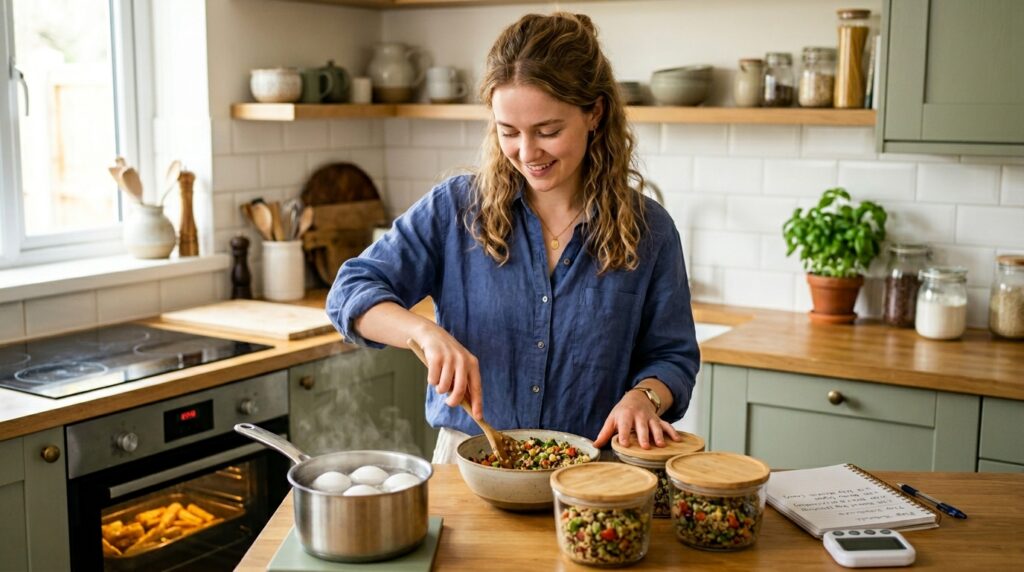
The most efficient keto prep approach runs four things simultaneously by using oven time as passive cooking time. The entire session produces enough food for five to six days of lunches and dinners from a single two-hour block.
Minute 0 to 5: Set up and preheat
Preheat the oven to 200C. Set out all your containers, a chopping board, and the proteins you plan to cook. Lay out two oven trays. While the oven heats, season the chicken thighs with salt, pepper, and any herbs, and cut the vegetables you plan to roast. Put the eggs on to boil.
Minute 5 to 45: Oven and hob working simultaneously
Once the oven reaches temperature, put the chicken thighs in. Set a timer for 35 minutes. While the chicken is in the oven, continue the hob work: the eggs should be boiling, the mince can be browning in a pan, and the cauliflower rice can be dry-fried in batches. Put the vegetables on the second tray and add them to the oven at the 20-minute mark (when the chicken has 15 minutes left), so both finish around the same time.
Minute 45 to 75: Cool, store, and finish
Remove the chicken and vegetables from the oven and leave to cool on the tray, not in containers. Food placed directly into airtight containers while hot creates steam and condensation that shortens shelf life. Use the cooling time to wash and dry the leafy greens, portion the nuts, and mix the chia pudding. Once the proteins and vegetables have reached room temperature (about 20 to 30 minutes), transfer to containers and refrigerate.
Minute 75 to 90: Label and organise
Label each container with the contents and the date prepared. Organise the fridge so the items with the shortest shelf life (salmon, prawns, sauteed spinach) are at eye level and used first. Items with longer shelf life (hard-boiled eggs, roasted peppers, bacon) go to the back or lower shelf.
| The rule that makes the system workNever let the oven sit idle while something is on the hob. Every keto batch cooking session should have at least two things cooking at the same time. Proteins roast in the oven while vegetables brown on the hob. Hard-boiled eggs cool on the counter while mince browns in a pan. Parallelising the cooking is what compresses a week of food into two hours. |
Keto Meal Prep Containers: What to Use and What to Avoid
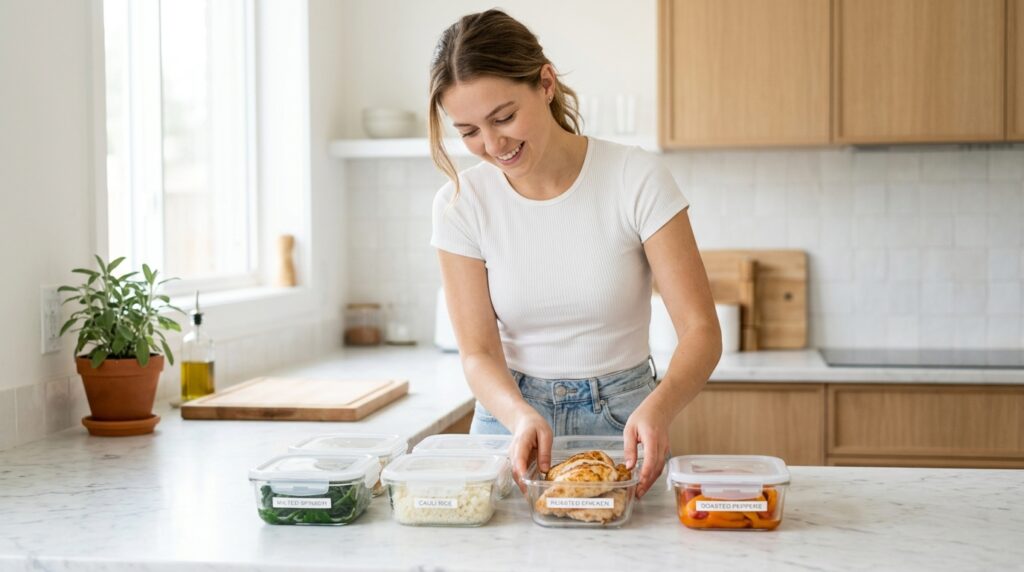
Container choice has a direct effect on how long prepped keto food stays fresh and how easy the system is to maintain. The wrong containers lead to soggy vegetables, absorbed odours, and shortened shelf life that makes the prep feel less worthwhile.
Glass containers: the best choice for keto meal prep
Glass containers with airtight lids are the strongest choice for keto meal prep. They do not absorb fat, oil, or odours from high-fat ingredients like roasted chicken, salmon, or bacon. They are safe to reheat directly in the microwave or oven. They are visually transparent so you can see what is inside without opening. A set of four to six glass containers in 500ml to 1 litre sizes covers the majority of weekly prep needs. In the UK, IKEA, Lakeland, John Lewis, and Amazon all carry good-quality glass prep containers in the 15 to 30 pound per set range.
Plastic containers: acceptable but with limitations
BPA-free plastic containers are acceptable for storing vegetables, leafy greens, and non-fatty items. Avoid storing high-fat cooked proteins in plastic for extended periods, as the fat can cause staining and minor odour absorption over time. Do not microwave food in plastic containers. If you use plastic, choose food-grade, BPA-free versions from established brands.
Mason jars and clip-top jars: ideal for liquid and semi-liquid prep
Mason jars and clip-top glass jars are the best option for chia seed pudding, keto smoothie components, and sauces or dressings. They seal tightly, are odour-neutral, and stack well in a fridge door. A set of 500ml clip-top jars from Kilner or IKEA costs under 15 pounds and serves most liquid prep needs.
What to avoid
Avoid single-use plastic bags for storing cooked proteins as they do not create an airtight seal and lead to faster drying and flavour loss. Avoid cling film directly on cooked protein surfaces as it can cause condensation and premature spoiling. For green leafy vegetables, a container lined with a dry paper towel is significantly more effective than a sealed container without one, as it absorbs the moisture that would otherwise cause wilting within 24 hours.
Keto Meal Prep Ideas for a Full Week: How the Components Combine

With the components from a single batch cooking session, you can build the following combination of meals across five to six days without any additional cooking:
| Meal | Components used | Assembly time |
| Chicken and cauliflower rice bowl | Chicken thighs + cauliflower rice + leafy greens + olive oil | 3 minutes |
| Salmon and asparagus plate | Salmon fillet + asparagus + lemon squeeze | 2 minutes cold or 3 minutes reheated |
| Beef mince and roasted broccoli bowl | Beef mince + roasted broccoli + cauliflower rice | 3 minutes reheated |
| Egg and bacon breakfast | Hard-boiled eggs + bacon + wilted spinach | 2 minutes |
| Prawn and avocado salad | Prawns + leafy greens + half avocado + olive oil | 3 minutes |
| Smoked salmon and cream cheese | Smoked salmon + cream cheese + cucumber rounds | 2 minutes no-cook |
| Chicken and roasted pepper salad | Chicken + roasted peppers + rocket + parmesan + olive oil | 3 minutes |
| Chia seed pudding breakfast | Chia pudding + handful of raspberries + walnuts | 0 minutes (made ahead) |
| Mince and greens bowl | Lamb or beef mince + leafy greens + olive oil + lemon | 3 minutes |
Notice that none of these meals require additional cooking beyond reheating. The total time from fridge to plate is under five minutes for every option. This is what keto meal prep achieves for beginners: it shifts the work from seven daily cooking sessions to one two-hour weekend block, and it makes the correct food choice the easiest available option every time you open the fridge. For a structured weekly meal plan that tells you exactly which of these combinations to use on which day, the lazy keto meal plan for beginners builds the week out in full. And for your first breakfast prep session, the quick keto breakfast ideas guide covers every option that works as both a fresh cook and a prep-ahead breakfast.
Frequently Asked Questions
How long does keto meal prep food last in the fridge?
Most cooked keto proteins last three to five days in airtight containers in the fridge. Cooked chicken thighs last four to five days. Hard-boiled eggs last seven days stored unpeeled. Cooked mince lasts three to four days. Cooked salmon and prawns should be consumed within three days. Roasted vegetables last three to five days. Washed leafy greens with a paper towel in the container last three to four days. Chia seed pudding lasts four days sealed. If you are prepping for a full working week, cook salmon and prawns midweek rather than at the weekend to keep them within their shelf life.
What are the best keto meal prep containers for beginners?
Glass containers with airtight lids are the best choice for keto meal prep because they do not absorb fat, oil, or odours from high-fat foods, and they are safe to reheat directly. A set of four to six glass containers in 500ml to 1 litre sizes plus two or three 500ml clip-top jars for liquid prep covers the majority of weekly needs. IKEA, Lakeland, and Amazon all carry good sets in the 15 to 30 pound range. Avoid thin-walled plastic containers for storing cooked proteins as the fat content of keto food causes faster odour absorption and minor flavour degradation over time.
Can I freeze keto meal prep components?
Yes, and freezing significantly extends the value of a prep session. Cooked mince, chicken thighs, and pork freeze well for up to three months. Roasted vegetables lose some texture when frozen but are still usable in cooked dishes. Cauliflower rice freezes excellently and can be cooked directly from frozen in a hot pan in four minutes. Eggs, cream cheese, and leafy greens do not freeze well and should be consumed fresh. If you are preparing two weeks of protein in one session, freeze half immediately after cooling and transfer to the fridge three days before you need it.
Is keto meal prep worth it if I only cook for myself?
Yes, and arguably more so than when cooking for a family. When cooking for one person, the temptation to reach for convenience food or a takeaway is highest on weekday evenings when there is no social meal structure to anchor eating habits. Having prepped food ready in the fridge directly removes that temptation. A batch cooking session for one person takes the same two hours but produces smaller quantities, so consider halving the protein quantities while keeping the vegetable and egg prep the same. The time saving across the week is proportionally identical regardless of household size.
How do I keep keto meal prep interesting across the week?Vary the proteins across each prep session rather than cooking the same protein every week. Alternate between chicken thighs, salmon, beef mince, prawns, and pork across different weeks so the rotation never feels stale. Use sauces and dressings to change the flavour profile of the same base components: the same chicken thighs taste completely different served over cauliflower rice with olive oil and lemon versus in a pan sauce with cream and herbs. Building a repertoire of four to five quick keto sauces you make fresh in three minutes is the most effective way to prevent food fatigue without adding significant prep time. See the keto food list for a full breakdown of keto-safe flavourings, oils, and condiments to rotate through.
Start Your First Keto Prep Session This Weekend
Two hours on a Sunday produces five to six days of effortless keto eating. That equation makes the investment obvious. The first session always takes longer because you are building the routine for the first time. By the third session, the entire process runs on autopilot. You know what goes in the oven first, you know which containers you need, and you know the order that produces hot food ready to cool with no gaps in the timeline.
The research on both meal planning and home cooking supports what most successful keto dieters find through experience: the diet that gets followed consistently beats the diet that is theoretically optimal but practically difficult. Keto meal prep for beginners is the practical infrastructure that makes consistency possible, particularly in the first three months when habits are still forming and the daily food environment has not yet been reorganised around the new way of eating.
Build the prep routine around the meals in the lazy keto meal plan for beginners, stock the ingredients from the keto pantry essentials guide, and if you want to confirm your macros are correctly set before you start, the keto macro calculator gives you a personalised daily target in under two minutes.
References
All external sources cited in this article are peer-reviewed studies or established medical references.
1. Ducrot P, Mejean C, Aroumougame V, et al. Meal planning is associated with food variety, diet quality and body weight status in a large sample of French adults. PMC, International Journal of Behavioral Nutrition and Physical Activity, 2017
2. Mills S, White M, Brown H, et al. Frequency of eating home cooked meals and potential benefits for diet and health: cross-sectional analysis of a population-based cohort study. PMC, International Journal of Behavioral Nutrition and Physical Activity, 2017
3. Masood W, Annamaraju P, Uppaluri KR. Ketogenic Diet. NCBI StatPearls, 20234. Li S, Du Y, Meireles C, et al. Adherence to ketogenic diet in lifestyle interventions in adults with overweight or obesity and type 2 diabetes: a scoping review. PMC, Nutrition and Diabetes, 2023