
Building a solid keto pantry list before you start is one of the most underrated moves a beginner can make. When your kitchen is stocked with the right ingredients, eating low-carb stops feeling like a restriction and starts feeling automatic. You open the fridge or cupboard and everything in front of you works for your goals. The problem for most people starting keto is that they clear out the bread and pasta, buy a few avocados, and then stand in the kitchen at 7pm with no idea what to cook. This guide solves that. It covers every category of keto staple you need, what to look for when buying them, and which UK supermarket staples are worth keeping on your shelf at all times.This is not a recipe list. It is a foundation. Once these items are in your kitchen, you can build any keto meal without planning, without hunting for specialist ingredients, and without resorting to a takeaway. For a full structured approach to eating keto from day one, the complete keto diet plan pairs with this pantry guide perfectly.
Why Your Keto Pantry List Determines Your Success

The ketogenic diet is a high-fat, very low-carbohydrate eating approach, typically limiting carbohydrate intake to 20 to 50 grams of net carbs per day. A 2024 review published in the Journal of Nutritional Metabolism (NCBI) confirms that the primary mechanism of the ketogenic diet is the reduction of carbohydrate supply, which shifts the body’s metabolism from glucose-dependent energy production to fat-based ketone body production. [1]
That shift only works consistently if the food around you supports it. Decision fatigue is one of the most common reasons people fall off keto in the first two weeks. When you are hungry at the end of a long day and your kitchen has nothing low-carb ready to use, you will reach for whatever is fastest. A stocked keto pantry removes that decision entirely. The answer to ‘what can I eat?’ becomes obvious the moment you open your cupboard.
This matters more than most beginners realise. A well-stocked kitchen is not a luxury for people who love cooking. It is a practical strategy for staying in ketosis consistently, reducing the mental load of meal planning, and avoiding the hidden carb traps that come from last-minute food decisions. If you are unsure what your carb threshold should be, the keto macro calculator will give you a personalized daily target before you start shopping.
The Complete Keto Pantry List by Category
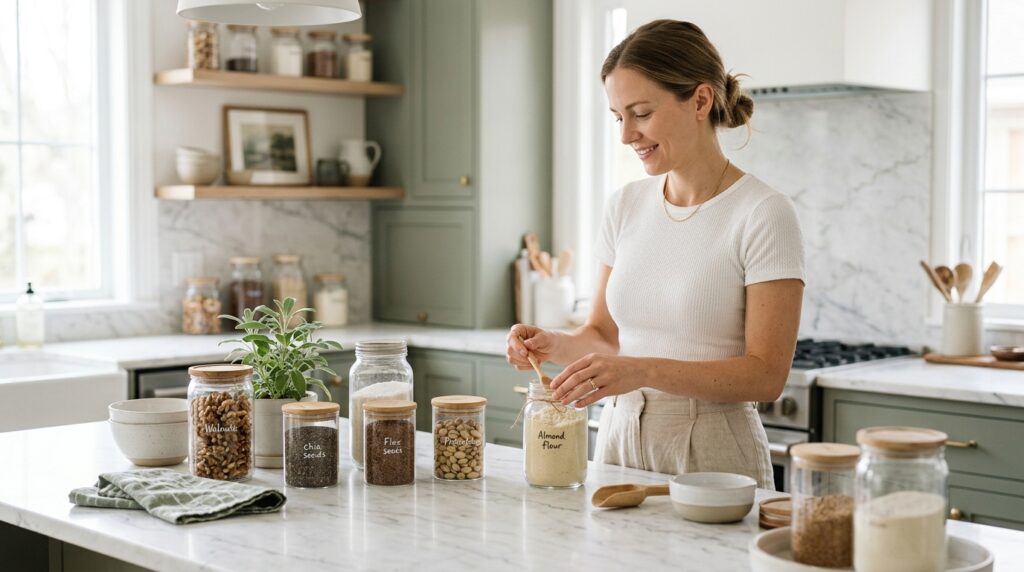
1. Healthy Fats and Oils
Fat is the foundation of the keto pantry list. It is your primary energy source on a ketogenic diet, so the quality and variety of fats you keep in your kitchen directly affects how your meals taste, how full you stay, and how well the diet works.
| Fat or oil | Best use | Notes |
| Extra virgin olive oil | Dressings, low-heat cooking | Choose cold-pressed, first press |
| Coconut oil | High-heat cooking, baking | Refined for neutral taste, unrefined for coconut flavour |
| Butter (unsalted) | Cooking, sauces, coffee | Grass-fed where possible |
| Ghee | High-heat cooking | Better smoke point than butter |
| Avocado oil | High-heat frying, dressings | Neutral flavour, very stable at high heat |
| MCT oil | Coffee, smoothies | Rapidly converted to ketones |
| Sesame oil | Asian-style dishes | Use as a finishing oil, not for cooking |
A 2022 systematic review published in PMC (Frontiers in Nutrition) found that regular consumption of unsaturated fats from sources such as olive oil, nuts, and avocados was associated with improved lipid profiles, reduced inflammation markers, and better glycaemic control. These are the fats that should form the backbone of your keto kitchen. [2]
2. Nuts and Seeds
Nuts and seeds are among the most useful keto staples for beginners. They provide fat, fiber, and protein in one small portion, require no preparation, and can be used in cooking, baking, or eaten as a snack. Always choose plain, unsalted, unflavored varieties. Flavored or roasted nuts frequently contain added sugar or starch coatings. See our guide on hidden carbs in food for the full list of nut products to avoid.
| Nut or seed | Net carbs per 30g | Best use |
| Macadamia nuts | 1g | Snacking, highest fat content of any nut |
| Pecans | 1g | Snacking, topping for salads |
| Brazil nuts | 1g | Snacking, excellent selenium source |
| Walnuts | 2g | Salads, cooking, omega-3 source |
| Almonds | 3g | Snacking, almond flour baking |
| Pumpkin seeds | 2g | Salads, yoghurt topping |
| Chia seeds | 1g | Puddings, smoothies, thickening |
| Flaxseeds | 0g net | Baking, fibre boost |
| Hemp seeds | 1g | Smoothies, salads, protein boost |
| Sunflower seeds | 3g | Snacking, cooking |
3. Low-Carb Flours and Baking Staples
Conventional flour contains around 70 grams of carbohydrate per 100g and is off the table on keto. These replacements allow you to bake, thicken sauces, and coat proteins without disrupting ketosis:
| Ingredient | Net carbs per 100g | Best use |
| Almond flour | 10g | Baking, breadcrumbs, pancakes |
| Coconut flour | 18g | Baking (use less, very absorbent) |
| Psyllium husk | 0g net | Bread texture, binding, fibre |
| Flaxseed meal | 0g net | Egg replacement, binding |
| Xanthan gum | 0g | Thickening sauces and gravies |
| Lupin flour | 12g | Pasta alternative, baking |
| UK note on coconut flourCoconut flour absorbs far more liquid than almond flour. If a recipe calls for 100g of almond flour, you need roughly 30g of coconut flour. Do not substitute them 1:1 or your bake will not work. Most UK supermarkets now stock almond flour in the free-from aisle or health food section. Waitrose, Holland and Barrett, and Sainsbury’s carry it reliably. |
4. Canned and Jarred Goods
These are the true backbone of the keto pantry essentials list. They last months, require no preparation, and can turn a few fresh ingredients into a complete meal in under 20 minutes:
Tinned fish: sardines in olive oil, tinned tuna, smoked mackerel, tinned salmon. All are high in fat, high in protein, and zero carbs. Tinned fish in brine is fine but check for added sauces that may contain sugar.
Coconut milk and coconut cream: full-fat varieties only. Low-fat coconut milk adds water where you want fat. Coconut cream is richer and better for sauces and curries.
Tinned tomatoes and passata: check the label. Standard tinned tomatoes contain 3 to 4 grams of net carbs per 100g, which is manageable in small amounts. Avoid sweetened passata or tomato sauces with added sugar.
Olives: zero carbs, high in fat, and one of the most convenient keto snacks available. Stock both green and black varieties.
Capers, anchovies, sun-dried tomatoes in oil: all add concentrated flavour to keto cooking with minimal carbs. Sun-dried tomatoes are higher in carbs than fresh, so measure rather than eating freely.
5. Condiments and Sauces
Most commercial condiments contain hidden sugars. Keep this shortlist of verified keto-safe options:
| Condiment | Carbs per serving | Safe? |
| Full-fat mayonnaise (plain) | 0g | Yes, check no added sugar |
| Dijon mustard | 0.5g per tsp | Yes |
| Yellow mustard (plain) | 0g | Yes |
| Hot sauce (Tabasco, Frank’s) | 0g | Check label for no sugar |
| Coconut aminos | 1g per tsp | Yes, use instead of soy sauce |
| Apple cider vinegar | 0g | Yes, excellent in dressings |
| Tamari (gluten-free soy sauce) | 0.5g per tsp | Yes in small amounts |
| Fish sauce (unflavoured) | 0.5g per tsp | Yes in small amounts |
| Ketchup (standard) | 5g per tbsp | No, avoid |
| Barbecue sauce | 8-12g per tbsp | No, avoid |
6. Sweeteners
You do not need to give up the sweetness of keto. These are the safest options for your keto cupboard staples in the UK:
Erythritol: zero net carbs, does not raise blood glucose, available in granulated and powdered form. Tastes most similar to sugar of all options. Widely available in UK supermarkets.
Monk fruit sweetener: zero calories, zero glycaemic impact, significantly sweeter than sugar so use less. Often blended with erythritol for better texture in baking.
Stevia (pure): zero carbs, natural plant-derived. Avoid blends that include maltodextrin as a bulking agent. Check the ingredients label on any stevia product before buying.
Allulose: rare in UK high street stores but available online. Behaves most like sugar in baking and does not crystallise when cooled.
What to avoid: maltitol (high glycaemic index despite being a sugar alcohol), aspartame-based sweeteners (controversial and found in many diet drinks), and any sweetener blend listing maltodextrin or dextrose as the first ingredient.
7. Herbs, Spices and Flavour Boosters
Plain herbs and spices contain negligible carbs and are completely unrestricted on keto. Build this collection and your meals will never taste boring:
| Core keto spice rack for UK kitchens Smoked paprika, cumin, turmeric, garlic powder, onion powder, cayenne, chilli flakes, cinnamon, oregano, thyme, rosemary, basil, bay leaves, black pepper, sea salt, celery salt. Ready-made blends to look for: za’atar, Cajun seasoning, Italian mixed herbs, garam masala (check for no added sugar). Avoid spice blends that list sugar, maltodextrin, or modified starch in the ingredients. |
What to Stock in Your Keto Kitchen Fridge and Freezer

The pantry forms your shelf-stable foundation, but the fridge and freezer are where your daily keto eating actually happens. These are the basic keto ingredients to always have on hand:
Fridge essentials
Eggs: the single most versatile keto ingredient. Scrambled, fried, boiled, baked, used in batters or sauces. Buy the largest box your fridge will hold. Free-range where budget allows.
Butter and ghee: keep both. Butter for flavour, ghee for high-heat cooking without burning.
Full-fat hard cheese: cheddar, parmesan, mozzarella, halloumi, and cream cheese. Avoid pre-grated cheese, which often contains anti-caking agents including starch.
Double cream and full-fat Greek yoghurt: double cream is essentially zero carb and works in sauces, coffee, and desserts. Full-fat Greek yoghurt contains 4 to 5 grams of carbs per 100g and should be measured, not eaten freely.
Fresh leafy greens: spinach, kale, rocket, watercress. These are the only vegetables you can eat without measuring on strict keto. Keep a bag or bunch available at all times.
Avocados: buy a mix of ripe and unripe so they are ready across the week. Rich in potassium and healthy monounsaturated fats, avocados are one of the most nutritionally dense foods in the keto pantry.
Fresh herbs: flat-leaf parsley, fresh basil, and coriander transform simple keto meals. Buy a growing pot rather than cut herbs to reduce waste.
Freezer essentials
Meat and fish: chicken thighs, beef mince, lamb mince, salmon fillets, and prawns. Thighs outperform breasts on keto because of their higher fat content. Buy in bulk and freeze in portions.
Frozen leafy greens: spinach and kale freeze well and are nutritionally equivalent to fresh. Ideal for adding to cooked dishes and sauces without the risk of fresh leaves going off mid-week.
Cauliflower rice: frozen cauliflower rice from most UK supermarkets is a genuine time-saver. It cooks in three minutes and forms the base of dozens of keto meals.
Berries: strawberries, raspberries, and blackberries are the only keto-safe fruits in meaningful amounts. Keep a bag frozen for smoothies, desserts, or yoghurt toppings.
How to Build Your Keto Pantry List Without Overspending
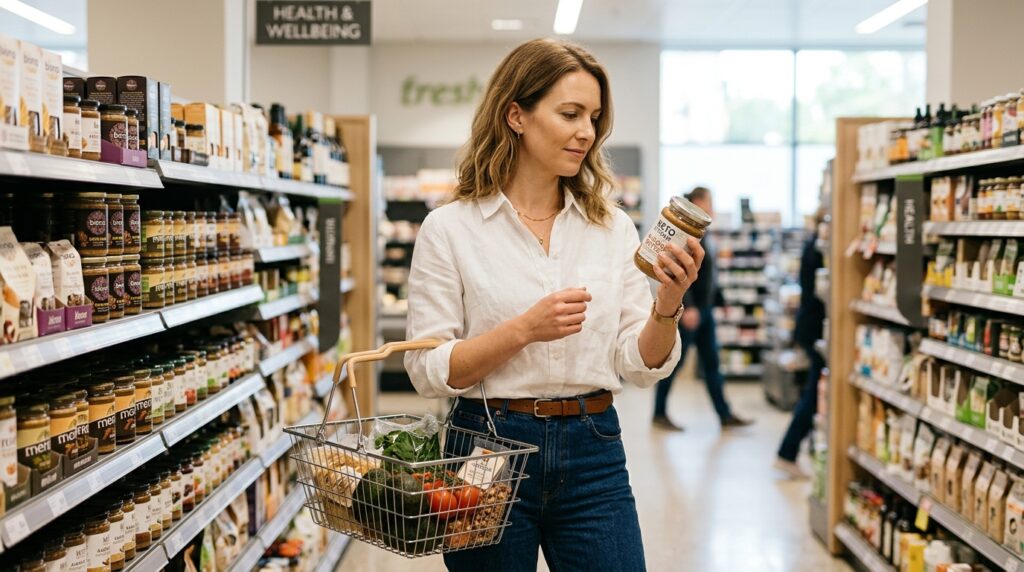
1. Start with the non-negotiables
Do not try to stock everything on the first shop. Buy the core fats (olive oil, butter, coconut oil), one or two nut varieties, eggs, leafy greens, one protein source, and a tin of fish. This covers the majority of keto meals and costs less than a weekly standard shop.
2. Buy flours and sweeteners once a month
Almond flour, coconut flour, erythritol, and psyllium husk are used in smaller quantities and last weeks to months. Do not buy these weekly. A 1kg bag of almond flour from Costco, Holland and Barrett, or Amazon typically costs half the price per gram of a smaller supermarket pack.
3. Shop the free-from and health food aisles in UK supermarkets
Waitrose, Sainsbury’s, Tesco, and M&S all carry keto-friendly staples in their free-from sections. Lidl and Aldi carry almond flour, nut butters, and full-fat coconut milk at significantly lower prices than branded alternatives. You do not need a specialist health food shop to build a solid keto pantry list in the UK.
4. Build the habit of label reading from day one
A 2020 study in the American Journal of Preventive Medicine (PubMed) found that updated nutrition labelling improved consumer awareness of added sugars, but many shoppers still focused on front-of-pack claims rather than the full nutrition panel. [3] On keto, the habit of checking total carbohydrates and fibre on the back of every new product is not optional. It is the skill that keeps you in ketosis when you are shopping quickly.For a complete reference on reading nutrition labels for keto, see the guide on net carbs vs total carbs before your first shop.
Frequently Asked Questions
What is the most important item on a keto pantry list for beginners?
Eggs are the single most important item for any beginner building a keto pantry list. They are nutritionally complete, extremely versatile, require no preparation time, contain zero carbohydrates, and pair with almost every other keto ingredient. If you have eggs, butter, and a leafy green, you have a meal. Beyond eggs, a good olive oil and a tin of fish are the next highest-value additions for their cost and versatility.
What keto staples are available in UK supermarkets without going to a health food shop?
The majority of keto cupboard staples in the UK are available in mainstream supermarkets. Tesco, Sainsbury’s, Waitrose, M&S, Lidl, and Aldi all carry almond flour, coconut oil, full-fat coconut milk, olive oil, tinned fish, nuts and seeds, butter, cream cheese, full-fat Greek yoghurt, double cream, and erythritol-based sweeteners. The free-from aisle and health food section are the best starting points. Lidl and Aldi offer the best value for keto basics.
How long does a keto pantry list last once it is stocked?
Most shelf-stable keto pantry items last between three and twelve months once opened. Olive oil and coconut oil keep for six to twelve months. Almond flour and coconut flour last three to six months in a sealed container. Nuts and seeds last two to four months in a cupboard and six to twelve months in the freezer. Tinned fish and canned goods last twelve to twenty-four months. Once you have done the initial stock-up, maintaining the pantry costs very little each week because you are only replenishing what you have used.
Can I follow keto on a budget using this pantry list?
Yes. The most expensive items on a keto pantry list are typically specialist flours and premium oils. These are not daily purchases. The daily cost of keto eating based on eggs, tinned fish, butter, leafy greens, and frozen protein is comparable to or lower than a standard supermarket shop. A 2023 review published in PMC examining the metabolic effects of ketogenic diets noted that emphasising whole-food fat sources such as olive oil, nuts, avocados, and fish produces the best metabolic outcomes while keeping the diet sustainable long term. [4] All of these are budget-accessible in UK supermarkets.
Do I need to buy everything on the keto pantry list at once?
No. Start with the core items: a good fat source, eggs, one protein, leafy greens, and a tin of fish. Add flours, sweeteners, and specialist ingredients over the following two to three weeks as you identify which meals you will cook regularly. Buying everything at once is expensive and risks buying items you will not use. The most effective approach is to build your keto pantry essentials list around the three or four meals you plan to rotate in your first week, then expand from there.

Stock Your Keto Pantry List Once and Eat Low-Carb Every Day
The keto pantry list in this guide is not meant to be completed in one shopping trip. It is a reference to build toward over the first few weeks of your keto journey. Start with the fats, eggs, and a protein source. Add the nuts, flours, and condiments as you settle into your preferred meals. Within a month, your kitchen will be the kind of place where eating keto feels effortless rather than effortful.
The biggest obstacle to staying in ketosis is not willpower. It is convenience. When the right foods are available and the wrong ones are not, the decision is already made for you. A stocked keto kitchen is the most practical piece of infrastructure you can build for long-term results.For your first week of meals using these pantry staples, the lazy keto meal plan for beginners uses only whole ingredients, requires no specialist equipment, and keeps cooking time under 20 minutes. And if you want to make sure your macros are right before you start shopping, run your numbers through the keto macro calculator first.
References
All external sources cited in this article are peer-reviewed studies or established medical references.
1. Malinowska D, Zendzian-Piotrowska M. Ketogenic Diet: A Review of Composition Diversity, Mechanism of Action and Clinical Application. Journal of Nutritional Metabolism, NCBI, 2024
2. Khalili L, et al. Nuts as a Part of Dietary Strategy to Improve Metabolic Biomarkers: A Narrative Review. Frontiers in Nutrition, PMC, 2022
3. Grummon AH, et al. The Influence of the New US Nutrition Facts Label on Consumer Perceptions and Understanding of Added Sugars. American Journal of Preventive Medicine, PubMed, 2020
4. Batch JT, et al. Metabolic Effects of Ketogenic Diets and Their Utilization in Obesity Management: A Systematic Review. PMC, 2023