
If you’ve been researching low-carbohydrate diets, you’ve likely come across the term ketosis. But what is ketosis, really? Is it safe? How does it work? And how do you know when your body has entered this fat-burning state?
In simple terms, ketosis is a natural metabolic process in which your body shifts from using glucose (sugar) as its primary fuel source to burning fat and producing ketones for energy. This metabolic switch is the foundation of a structured Keto Diet Plan, and understanding it properly is key to long-term success.
In this beginner-friendly scientific guide, we’ll explore:
- What ketones are
- How ketosis works
- How long it takes to enter ketosis
- Signs you’re in ketosis
- Blood vs urine ketone testing
Let’s break it down clearly and scientifically — without overcomplicating it.
What Is Ketosis?

Under normal dietary conditions, your body runs primarily on glucose, which comes from carbohydrates such as bread, rice, fruit, sugar, and processed foods.
When you eat carbohydrates:
- They break down into glucose.
- Blood sugar levels rise.
- Insulin is released.
- Cells use glucose for energy or store it as glycogen.
However, when carbohydrate intake drops significantly — typically below 20–50 grams per day — the body’s stored glucose (glycogen) becomes depleted. As insulin levels fall, the body begins searching for an alternative fuel source.
That alternative fuel is fat.
When fat is broken down in the liver, it produces molecules called ketones. When ketones become your primary energy source, your body is officially in ketosis.
Download our Printable Keto Food List + Beginner Grocery Guide and avoid the most common keto mistakes.
What Are Ketones?

Ketones (also called ketone bodies) are energy molecules produced in the liver from fatty acids. They serve as an alternative fuel source when glucose is limited.
There are three main types of ketones:
- Beta-hydroxybutyrate (BHB) – The primary ketone circulating in the blood.
- Acetoacetate (AcAc) – The first ketone produced in the liver.
- Acetone – A byproduct that is partially exhaled in breath.
Among these, BHB is the most abundant and the one most commonly measured in blood ketone tests.
Ketones are particularly important because:
- The brain cannot directly use fat for energy.
- Ketones can cross the blood-brain barrier.
- They provide a stable and efficient fuel source for brain cells.
This is why many people report improved mental clarity once fully adapted to ketosis.
How Does Ketosis Work?
Let’s look at the step-by-step metabolic shift:
Step 1: Carbohydrate Restriction
You significantly reduce carbohydrate intake.
Step 2: Glycogen Depletion
Stored glycogen in the liver and muscles gets used up within 24–48 hours.
Step 3: Insulin Levels Drop
Lower insulin signals the body to release stored fat.
Step 4: Fat Breakdown
Fatty acids travel to the liver.
Step 5: Ketone Production
The liver converts fatty acids into ketones.
Step 6: Ketone Utilization
Cells begin using ketones instead of glucose for energy.
This metabolic transition is what makes ketosis fundamentally different from traditional low-fat dieting. Instead of simply reducing calories, ketosis changes how your body generates and uses energy.
How Long Does It Take to Enter Ketosis?

For most people, it takes 2 to 4 days of strict carbohydrate restriction to enter nutritional ketosis.
However, several factors influence the timeline:
- Current carbohydrate intake
- Metabolic health
- Insulin sensitivity
- Activity level
- Previous diet history
- Body composition
Highly active individuals may enter ketosis faster because exercise helps deplete glycogen stores more quickly.
For others — especially those transitioning from a high-carb diet — it may take up to 5–7 days.
Consistency matters more than speed.
Signs You’re in Ketosis

Not everyone experiences the same signs, but common indicators include:
1. Reduced Appetite
Ketones and stable blood sugar levels often suppress hunger hormones.
2. Increased Mental Clarity
Many people report sharper focus and reduced brain fog.
3. Stable Energy Levels
No more mid-day energy crashes caused by blood sugar spikes.
4. Dry Mouth and Increased Thirst
Glycogen holds water. As it depletes, water loss increases.
5. Frequent Urination
Water weight is shed early in ketosis.
6. “Keto Breath”
Acetone, one of the ketones, can cause a slightly fruity breath odor.
7. Mild Fatigue (Early Phase)
During adaptation, some experience temporary fatigue — often called the “keto flu.”
These signs are helpful, but they are not always definitive. The only way to confirm ketosis accurately is through testing.
Blood vs Urine Ketone Testing
Blood Ketone Testing (Most Accurate)
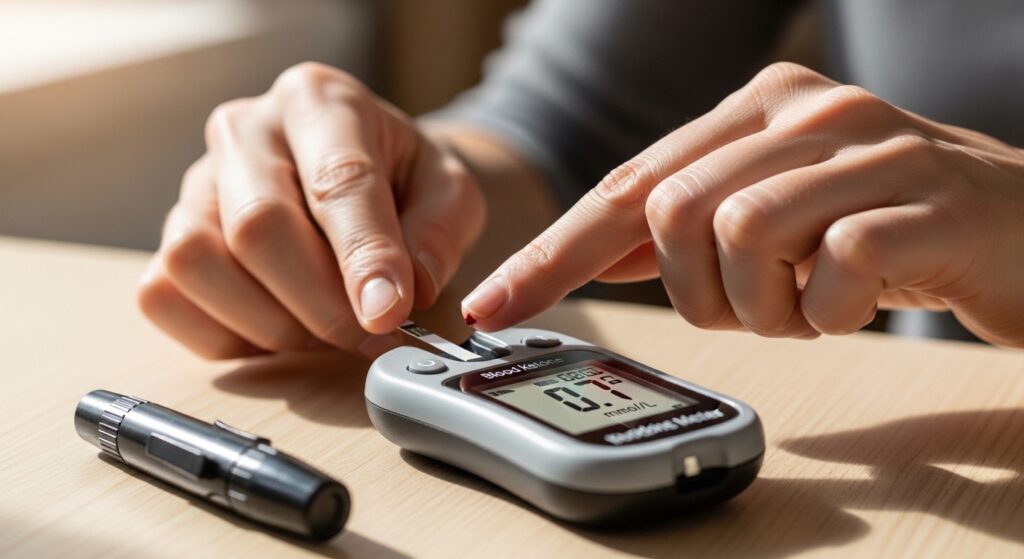
Blood ketone meters measure beta-hydroxybutyrate (BHB) levels.
Advantages:
- Highly accurate
- Measures active ketones in circulation
- Best for precision tracking
Optimal Ketosis Range:
0.5 – 3.0 mmol/L
Downsides:
- Requires finger prick
- Test strips can be expensive
This method is ideal for those who want strict monitoring.
Urine Ketone Strips (Beginner-Friendly)
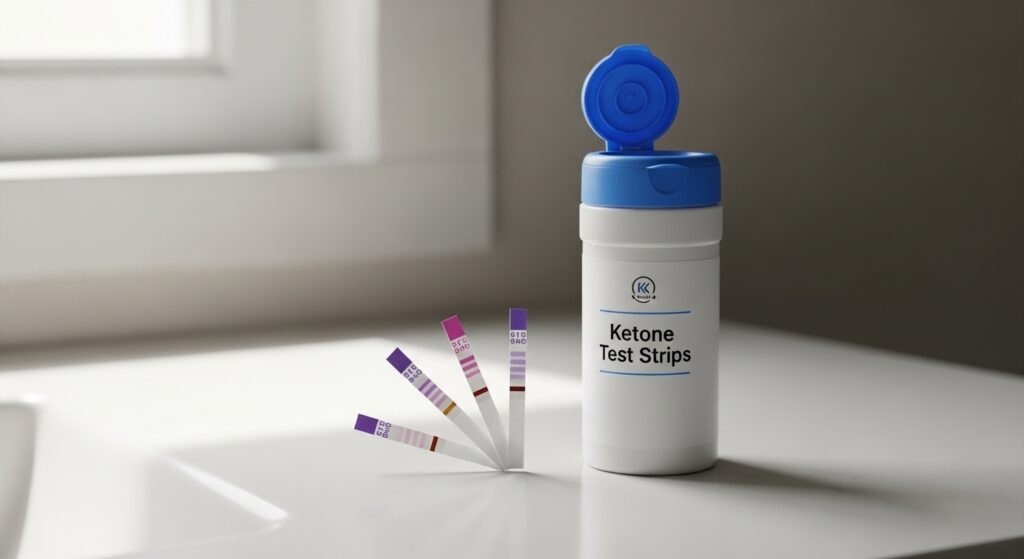
Urine strips measure excess acetoacetate excreted in urine.
Advantages:
- Affordable
- Easy to use
- Good for beginners
Downsides:
- Less accurate over time
- Adapted bodies waste fewer ketones
Urine strips are useful during the first 1–2 weeks but become less reliable as the body becomes efficient at using ketones.
Nutritional Ketosis vs Diabetic Ketoacidosis

It’s important to clarify a common misconception.
Nutritional ketosis (0.5–3.0 mmol/L) is safe and controlled.
Diabetic ketoacidosis (DKA) is a dangerous condition (usually above 10 mmol/L) that occurs in people with uncontrolled type 1 diabetes.
The two are not the same.
In individuals without severe insulin deficiency, nutritional ketosis is a regulated metabolic state — not a medical emergency.
Why Ketosis Supports Fat Loss

Ketosis promotes fat utilization in several ways:
- Lower insulin levels encourage fat release.
- Reduced appetite may lower calorie intake naturally.
- Stable blood sugar reduces cravings.
- The body becomes metabolically flexible.
However, ketosis alone does not guarantee weight loss. Calorie balance still matters.
Ketosis is a metabolic tool — not magic.
Common Mistakes When Trying to Enter Ketosis

Many beginners struggle due to avoidable errors:
- Eating too much protein
- Hidden carbs in sauces and snacks
- Not consuming enough electrolytes
- Fear of healthy fats
- Inconsistent carbohydrate intake
Following a structured Keto Diet Plan makes the transition smoother and more sustainable.
Is Ketosis Safe?
For most healthy individuals, nutritional ketosis is considered safe when properly implemented.
However, certain individuals should consult a healthcare professional before starting:
- People with type 1 diabetes
- Those with kidney disease
- Pregnant or breastfeeding women
- Individuals on glucose-lowering medications
Proper hydration and electrolyte management are essential during adaptation.
Final Thoughts: Understanding Ketosis the Right Way
So, what is ketosis?
Ketosis is a natural metabolic state where your body switches from burning glucose to burning fat and producing ketones for energy. It typically begins within a few days of carbohydrate restriction and can be confirmed through blood or urine testing.
Understanding ketosis removes confusion and helps you approach low-carbohydrate eating with confidence rather than guesswork.
If you’re starting your journey, make sure you follow a structured Keto Diet Plan that clearly outlines:
- Macronutrient balance
- Approved food lists
- Meal structure
- Testing guidance
Ketosis is not just about cutting carbs — it’s about teaching your body to efficiently use fat as fuel.
When done correctly, it becomes a powerful metabolic strategy that supports energy stability, appetite control, and fat utilization in a sustainable way.